
Comparative premise and context
Choosing a 150kW battery inverter for a new build versus a retrofit changes priorities: wiring routing and switchgear access rate high for retrofits, while thermal zoning and future expansion matter more in new builds. At larger scales project teams sometimes evaluate a 600kW energy storage inverter for parallel operation or containerized deployment; lessons from Hawaii’s island-grid microgrid projects illustrate how site constraints and permitting alter inverter selection and placement when containerized systems are used alongside a microgrid energy storage container.
Core electrical differences
New-build: single-point mains design, capacity reserved for dedicated battery feeders, straightforward cable trays and short DC runs; protection schemes can be specified from the start. Retrofit: limited feeder capacity, longer DC cabling, and legacy protection that often forces additional switchgear or a step-up transformer. Practical checklist — new build: short DC runs, dedicated protection relays, space for parallel units; retrofit: confirm existing feeder load, evaluate harmonic impacts, plan for DC isolation switches.
Mechanical, thermal and site works
New-build sites allow equipment rooms sized to spec and HVAC dedicated to inverter losses. Retrofits frequently require adapting existing rooms: minimizing vibrations, adding ducting, or placing equipment in containers. Concrete pad design differs — new builds can embed anchoring and drainage, retrofits often need above-grade skid solutions and noise mitigation. Consider these mechanical constraints early; they are the most common source of schedule slips on retrofit projects.
Controls, communications and grid interop
New-builds typically integrate native BMS/EMS protocols and fibre or industrial Ethernet to plant control, enabling robust telemetry and grid-forming options. Retrofits must bridge legacy SCADA and may rely on protocol converters or gateway hardware. Checkpoint list: confirm supported protocols (Modbus, IEC 61850), verify remote firmware update paths, and ensure anti-islanding behavior aligns with the utility interconnection agreement.
Commissioning, testing and regulatory compliance
Testing effort scales with site constraints. For new builds, staged FAT and integrated SAT follow a planned sequence; for retrofits, isolation and temporary bypasses complicate commissioning windows. Both need protection coordination studies and PV/battery export limit verification. Document these items early to reduce rework: relay settings, protection coordination sheets, and as-built single-line diagrams.
Cost drivers and procurement choices
Cost differences hinge on civil and electrical adaptation rather than raw inverter kW price. New builds pay for future-proofing (spare capacity, HVAC sizing); retrofits pay for integration (transformers, switchgear modifications, protocol interfaces). Alternatives to a direct replacement include modular inverters for phased upgrades or containerized systems that minimize site works — evaluate lifecycle O&M costs, not just initial CAPEX.
Common pitfalls to avoid
– Underestimating DC cabling resistive losses and thermal rise in retrofit conduits; – Assuming legacy protection will accept modern inverter ride-through without study; – Overlooking communications latency when aggregating multiple inverters; – Failing to reserve space for ancillary equipment (DC combiner boxes, HVAC, battery management terminals).
When a containerized approach shifts the trade-offs
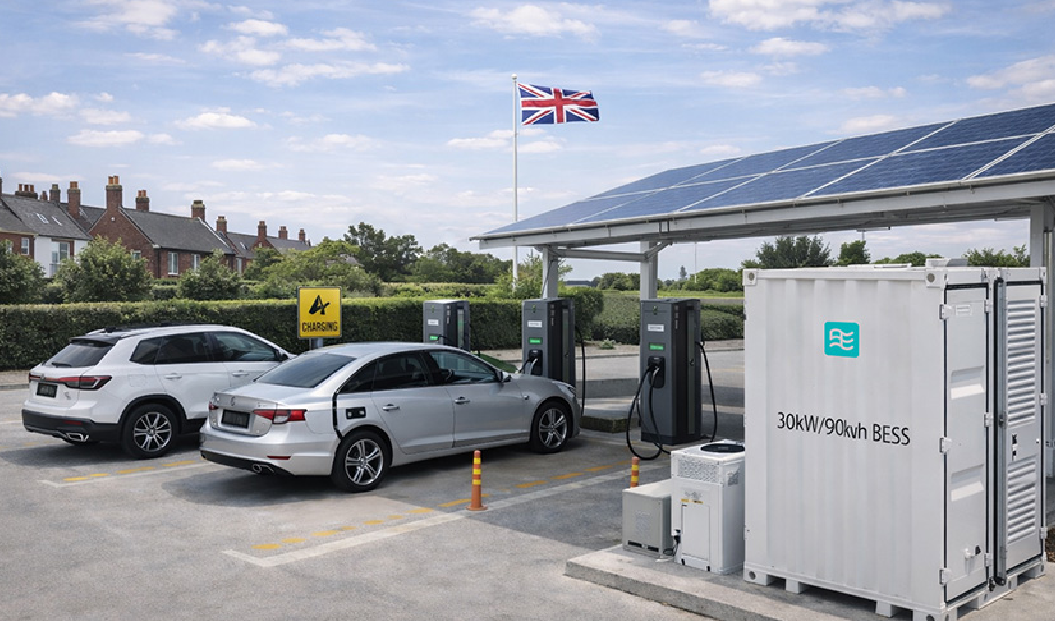
Containerized deployments reduce civil interfaces and simplify off-site factory integration testing, but they change logistics: transport access, crane lifts, and site-level grounding become critical. If the project contemplates scaling to higher power or wants predictable commissioning windows, a containerized layout is often the pragmatic choice — that rationale is why many system designers compare container options alongside rack-mounted solutions during early design phases.
Synthesis and practical recommendation
Compare requirements instead of product names: list electrical constraints, mechanical limits, communications needs, and commissioning windows, then map those to inverter features and site works. For many projects the fastest route from concept to reliable operation is to standardize on solutions proven in similar containerized microgrids and to choose vendors who document protection coordination and commissioning procedures. That approach is precisely the capability WidenEdge brings to system integrators working through new-build versus retrofit trade-offs.