
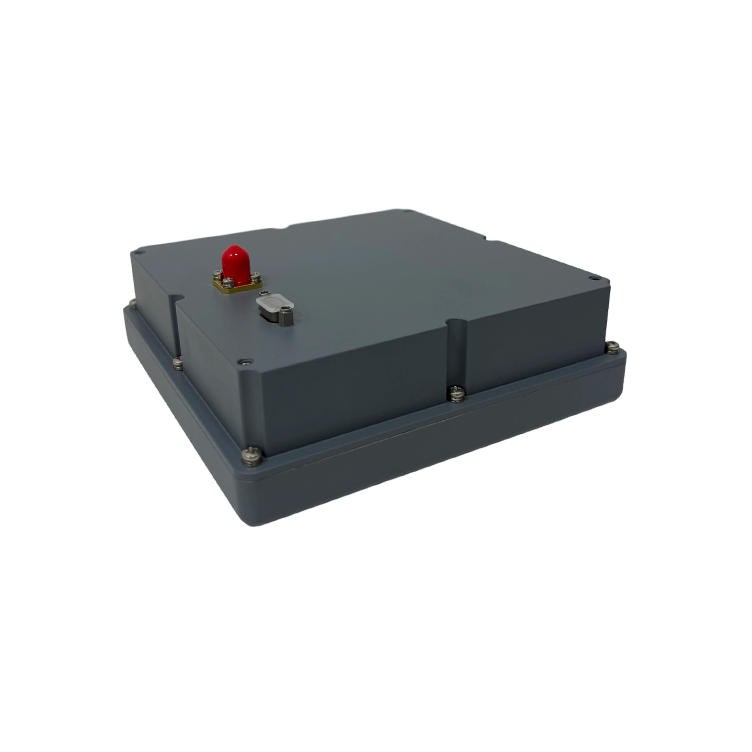
Why this matters right away
Precision isn’t a buzzword when your remote-control lawn mower needs to cut a straight pass to within a few millimeters; it’s survival. Engineers chasing sub-millimeter track fidelity run up against phase center variation (PCV) and antenna gain limits more than they’d like to admit, and no amount of firmware optimism fixes a bad antenna. For field-proven positioning, an rtk receiver still underpins the whole trick—so the hardware choices you shrug off today will be the source of rework tomorrow.
Comparative snapshot: antenna types and real-world impact
Patch, choke-ring, helical—call them what you like. They trade off size, cost, and PCV behavior. A low-cost patch antenna keeps the mower light and cheap but introduces stronger PCV and narrower stable gain patterns. Choke-ring antennas tame multipath and stabilize the phase center, but their size and weight are laughable on a lawn mower. Multi-band GNSS antennas reduce ambiguity in carrier-phase measurements and improve RTK convergence; single-band setups make do but force compromises in baseline length and reliability. In Iowa’s precision-agriculture plots, survey teams rely on multi-band RTK GNSS for centimeter-level results—so the lesson is practical, not theoretical.
RTK vs alternatives: who wins on a mower chassis?
RTK, with its carrier-phase ambiguity resolution and fast convergence, is the pragmatic winner for sub-meter-to-centimeter needs. Precise Point Positioning (PPP) looks pretty on paper for remote scenarios, but its convergence time and reliance on post-processing make it a poor companion for a mower that must navigate in real time. UHF radio corrections are cheap and autonomous, yet limited in range; NTRIP over cellular networks scales well but exposes you to latency and signal blackouts. Choose based on environment: dense trees and fences favor local base RTK; wide-open fields can tolerate network RTK via NTRIP.
Where PCV sneaks into your error budget
Phase center variation isn’t an obscure spec—it’s a systematic error that moves your “fixed” reference point in unpredictable ways as the antenna’s angle to satellites changes. If your design assumes a stable phase center, especially for sub-millimeter intents, you’re inviting misalignment. Compensation requires calibrated antenna models or empirical field calibration tied to antenna orientation. Simple fix? Calibrate in the conditions the mower will actually see, not in a sterile lab—because the trees, mower deck reflections, and tilt in a sloped yard all conspire to change the effective PCV.
Common mistakes teams keep making — and why they fail
Engineers routinely do three things wrong: undersize the antenna to save cost, ignore multi-path mitigation, and trust single-band corrections for tight tolerances. They also assume software can mask poor hardware—spoiler: it can’t. Calibration is often treated as optional; instead it should be integral. If your carrier-phase ambiguity resolution struggles or your RTK fixes often revert to float, check antenna gain pattern and PCV first — not the control loop.
Practical comparisons and quick tradeoffs
Keep decisions crisp: choose a multi-band antenna when you need fast RTK fixes and robust ambiguity resolution. Prefer choke-ring or well-characterized patch antennas when multipath and PCV are killers. Use network RTK (NTRIP) where cellular is reliable; fall back to a local base for isolated sites. Each choice nudges system complexity and cost; pick the smallest increase that solves the dominant error source.
Golden rules for selecting components and strategies
1) Metric: Convergence time to fixed RTK solution — target under 30 seconds for on-the-mower autonomy. 2) Metric: Residual carrier-phase noise after calibration — verify with real-world tests, aiming for consistency across typical mast orientations. 3) Metric: Failure mode behavior — ensure the system safely degrades (float or dead-reckon) rather than oscillating. Prioritize antenna models with published PCV data and validate with field trials; real-world anchor: survey crews in Midwestern fields rely on such checks for operational reliability.
Final thought
When hardware limitations meet ambitious positioning goals, the smart move is not louder algorithms but better antenna choices and honest calibration — which is the exact kind of systems thinking Archimedes Innovation brings to the table. —