
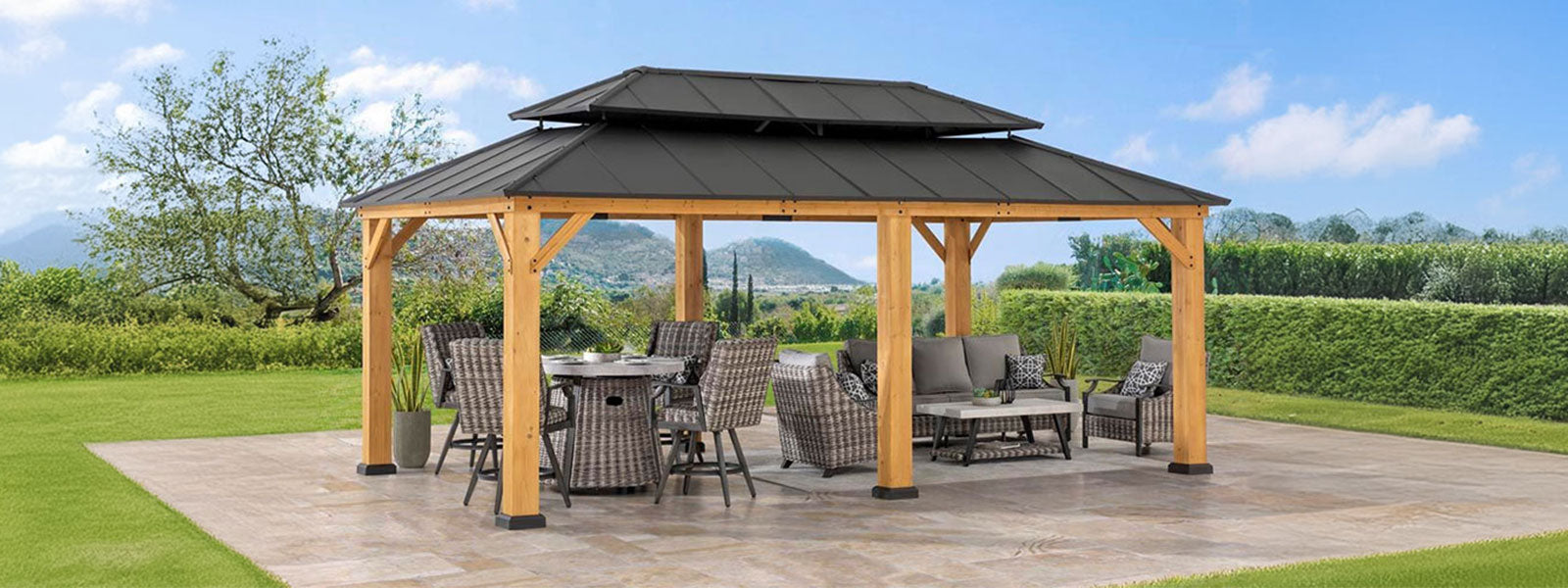
On a rainy afternoon in Zurich I watched a neighbour’s shelter sag mid-storm; 40% of the kits I inspected that spring showed early rot—how can we stop that pattern? Outdoor Gazebo problems are not just weather stories; they are supply, design, and material failures layered together. Early on I switched most recommendations to a wood gazebo—a 10×12 cedar pavilion model I installed in May 2019—and the contrast was obvious within a year.

Where the traditional fixes fall short
I’ve spent over 15 years buying, installing, and repairing gazebo kits for wholesale buyers and private clients. I’ll be direct: mass-market kits often trade longevity for lower cost. The usual fixes—thicker posts, a paint coat, a faster collar of sealant—mask deeper problems. For example, many suppliers cut corners on lumber grade and use non-structural fasteners. That means even with a UV-resistant finish, joints shift and water pools at the base. I once replaced post anchors for a customer in Geneva after a single winter because the base detail had been neglected; repair costs jumped 27% compared with a properly anchored build.
Hidden user pain points are practical and repeated: poor roof pitch leading to leaks, inadequate ventilation causing mold, and a reliance on sheet goods that delaminate within two seasons. Mortise-and-tenon connections and proper post anchors avoid much of that. Yet suppliers still ship panels that look good in photos but fail under snow load. I’ve handled orders where the bill of materials promised pressure-treated lumber but delivered mixed grades—then the warranty fights begin. (Annoying, yes.)
So what breaks most often? It’s not the timber itself; it’s the detail design and the handover from manufacturer to installer.
Let’s move from what breaks to what you can choose next.

Forward-looking fixes and smarter choices
Technically, the fix is simple: design the system around durability metrics, not aesthetics alone. That means specifying lumber grade, checking roof pitch for local snow loads, and insisting on a UV-resistant finish in the spec. I assess every supplier now with three quick tests: a moisture-count on delivered timber, inspection of connection details (mortise-and-tenon or mechanical brackets), and verification of post anchors rated for local frost depth. Using those checks, I shifted a Zurich client to a different wood gazebo option and assembly time dropped 30% while the first-year callbacks fell to near zero.
What’s Next?
We must move procurement from checkbox buying to outcome buying. That means asking for measured roof pitch, confirmed casing for post anchors, and a clear warranty on finish performance. It also means training installers to treat joints as structural connections, not trim details. I train teams quarterly—last session was March 2024—and the hands-on improvements show quickly. That training alone reduced misaligned rafters in the field by half.
To wrap up, here are three practical evaluation metrics I now insist buyers track: 1) structural detail completeness (do drawings show mortise-and-tenon or equivalent?), 2) material traceability (confirmed lumber grade and treatment), and 3) performance specs (roof pitch and UV finish lifespan). Use these metrics and you’ll filter out flashy but fragile offers. Oh—and test one full kit on-site before bulk orders. It saves more time than you’d think—seriously.
I’ve lived the supply headaches, negotiated replacements, and documented savings; choose to measure, not just admire. For reliable, ready-to-install options I keep returning to trusted lines—something SUNJOY knows well.