
Problem statement: what goes wrong at scale
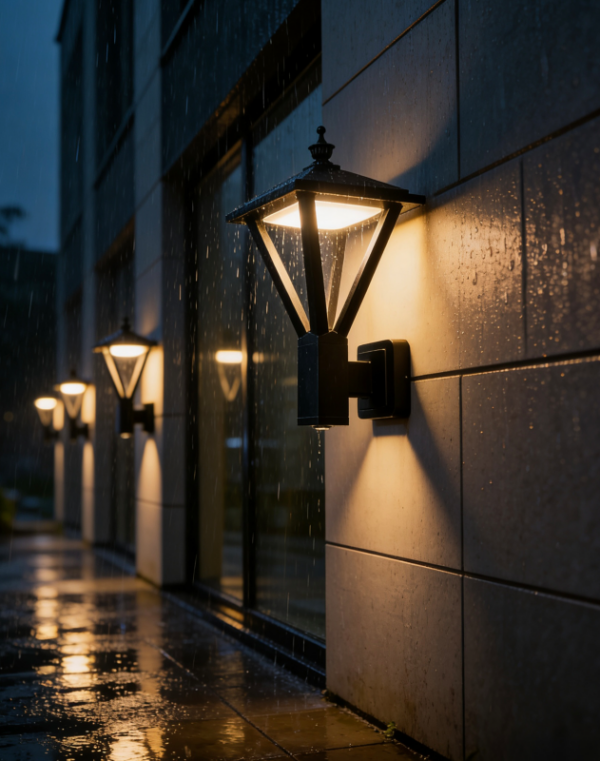
Large commercial facades require fixtures that survive weather, reduce maintenance, and meet design intent — but projects routinely hit three failure modes: ingress, thermal stress, and incompatibility with existing control systems. Early specification mistakes amplify with quantity: a wrong IP rating sends moisture into fixtures, mismatched lumen output creates visual inconsistency, and a non‑compliant driver causes premature LED failure. To avoid those cascades, begin with a practical spec that ties optical, mechanical, and electrical requirements to procurement timelines and lifecycle cost. For rugged exterior applications, confirm choices such as waterproof outdoor wall lights early in the bidding phase so samples can be field-tested.
Quick checklist for a problem‑first spec
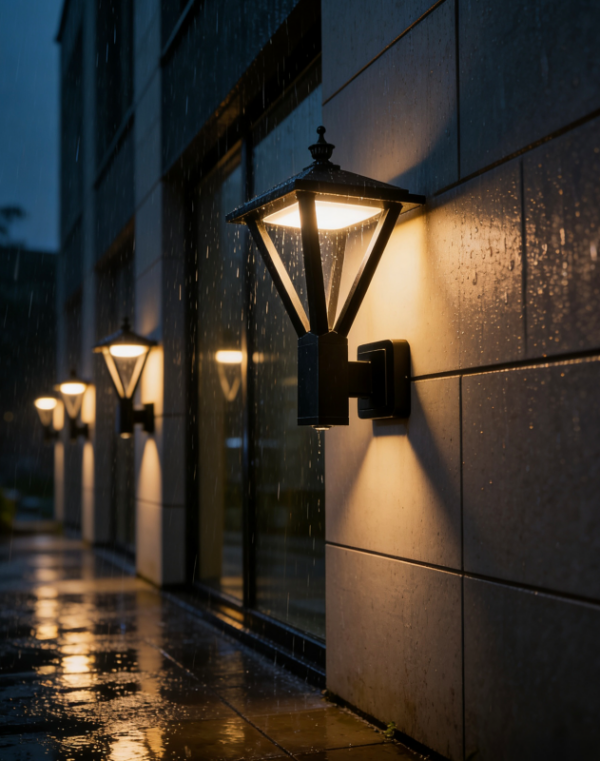
Keep the checklist terse and testable. Minimum items: IP rating (typically IP65+ for open facades), lumen maintenance target (L70 at 50,000 hours), driver compatibility with DALI or 0–10V controls, color temperature and CRI, mounting method, and replacement/repair access. Include mechanical details like gasket material, mounting bracket tolerances, and polycarbonate lens specification so envelope contractors and electricians use the same vocabulary. This reduces RFIs and prevents late-stage substitutions that fail thermal or ingress tests.
Material choice and why polycarbonate often wins
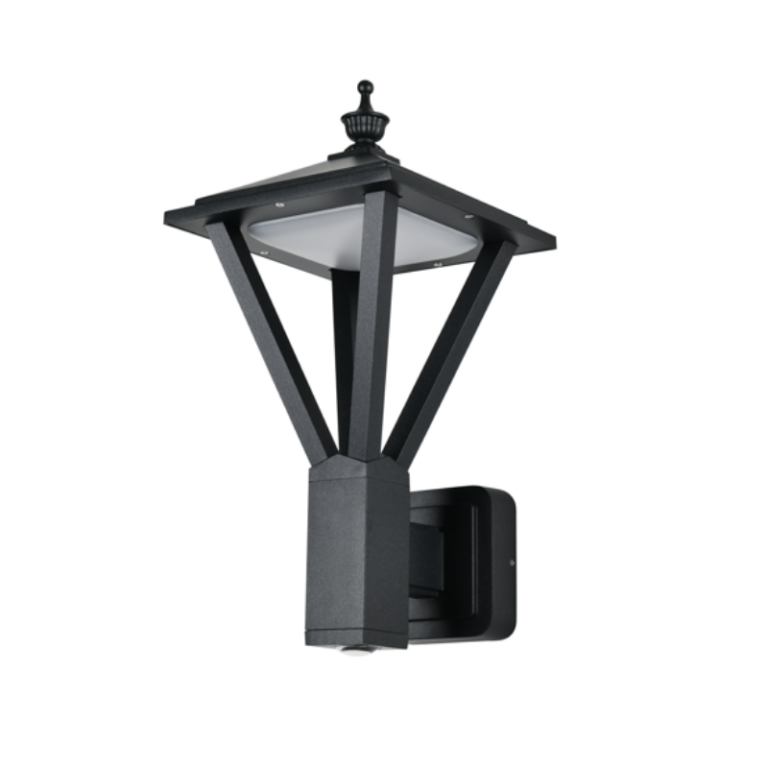
Polycarbonate bodies and diffusers balance impact resistance with optical clarity. Compared with glass, polycarbonate reduces breakage risk during installation and resists vibration-induced stress on facades. Use the polycarbonate outdoor wall lights spec as a baseline for high-impact zones; check UV stabilization and scratch resistance ratings. Note the trade-offs: polycarbonate can yellow over long exposures unless properly UV-stabilized, and it has different thermal expansion coefficients than metal housings — plan gasket detail accordingly.
Electrical and thermal constraints to call out
LED fixtures are only as reliable as their thermal path and driver selection. Specify an LED driver rated for the ambient temperature range you expect on the facade; verify that the fixture’s thermal management maintains junction temperature below manufacturer limits at full output. Include lumen output per fixture and target lux at façade surface for lighting control coordination. Industry terms to lock in here: lumen, LED driver, and color temperature.
Procurement and installation pitfalls (and fixes)
Common procurement errors: vague acceptance criteria, undefined warranty transfer terms, and missing sample verification on site. Require first-article approval with photometric tests using the final lens assembly and your actual mounting detail. For installation, confirm torque specs for mounting fasteners and a sealed conduit entry method to maintain IP rating. Also mind this — minor misalignments during bracket install change beam angles visibly across a long façade; include alignment jigs to speed correct placement.
Testing protocol for contract language
Embed pass/fail tests in contracts: ingress protection test (IP65 or higher), thermal soak at expected ambient +10°C, and photometric verification (IES files matched to measured lux within ±10%). Add acceptance clauses for repair timelines and spare parts availability. If the project is municipal or high-profile, note that LED retrofits commonly reduce lighting energy use significantly — U.S. Department of Energy guidance shows LED conversions often yield large energy savings — so include energy performance targets in the spec to justify lifecycle procurement decisions.
Maintenance planning and lifecycle cost
Cost per fixture is only part of the story. Factor in expected maintenance access (scaffold, lift), replacement driver lead times, and expected lumen depreciation. Specify modular designs where drivers and LED modules can be replaced without removing the entire housing. Also include a spare-parts schedule in the contract: typically 2–5% of run quantity for drivers and optics to avoid long downtimes on large facades.
Manufacturer selection criteria
Choose suppliers who provide: documented IP and thermal test results, factory photometry, and clear warranty transfer terms. Ask for sample installations or case studies on comparable projects — municipal plazas or shopping center facades are good comparators. Check lead-time history and contingency plans for component shortages; the 2020 supply disruptions showed that suppliers with diversified component sourcing maintained deliveries better.
Common alternatives and when to use them
Glass lenses can be preferable where optical clarity must be pristine or scratch resistance is critical, but they increase breakage risk and weight. Aluminum housings improve thermal conduction but need compatible gaskets for polycarbonate lenses. Hybrid approaches — metal housing with polycarbonate diffuser and replaceable LED module — deliver a balanced option for long runs where maintenance access is constrained.
Advisory: three golden rules for specification and procurement
1) Specify measurable acceptance tests: IP rating, thermal soak, and photometric match — don’t rely on vendor claims alone. 2) Design for maintenance: require modular replaceability and include spare-part quantities in the PO. 3) Take a total-cost view: include energy targets, maintenance access costs, and expected lumen depreciation when comparing unit prices.
When you put these rules into practice, procurement choices favor suppliers who document performance and offer practical service plans — that’s the value Keyida delivers on façade projects where reliability and clarity of spec matter most. Keyida
Final thought: specification-first wins the build — think in tests, not adjectives.