
Framework-driven opening: why allocation matters
When city managers and property investors assign capital to public lighting, the decision is not about fixtures alone — it’s about place activation, safety outcomes, and long-term operating cost. Use a repeatable framework to decide where to place pier-mount luminaires versus lower-scale bollard lights, and you transform an expense line into a measurable urban asset. The framework treats each lighting decision as a trade-off between capital expenditure, maintenance burden (IP rating and lumen depreciation), and social impact, producing a defensible allocation plan rather than intuition-driven purchases.
The five-step capital allocation framework
Adopt this methodical sequence to convert goals into budgets and spec sheets:
- Define outcomes: set clear KPIs (safety incidents, evening footfall, energy spend per lm).
- Map assets: classify corridors, plazas, waterfront piers and adjacent paths by use intensity and risk profile.
- Prioritize interventions: rank areas where pier-mount fixtures yield high visibility and where bollards reduce glare and mark circulation.
- Spec and cost: choose luminaire types with the right CCT, lumen output and IP rating for each context; factor in lifecycle costs.
- Phase and measure: stage procurement to match capital cycles and embed post-installation audits into the contract.
This sequence keeps decisions tied to measurable returns — a necessary posture for investors allocating limited public or private capital.
Budgeting logic: CAPEX vs OPEX, and where pier-mount wins
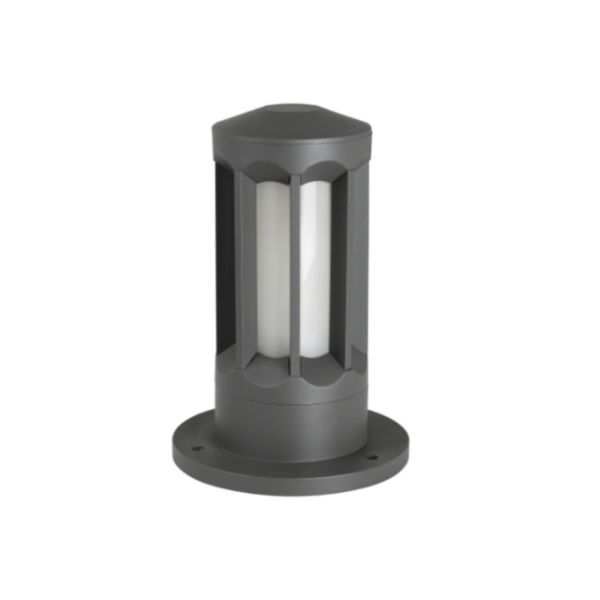
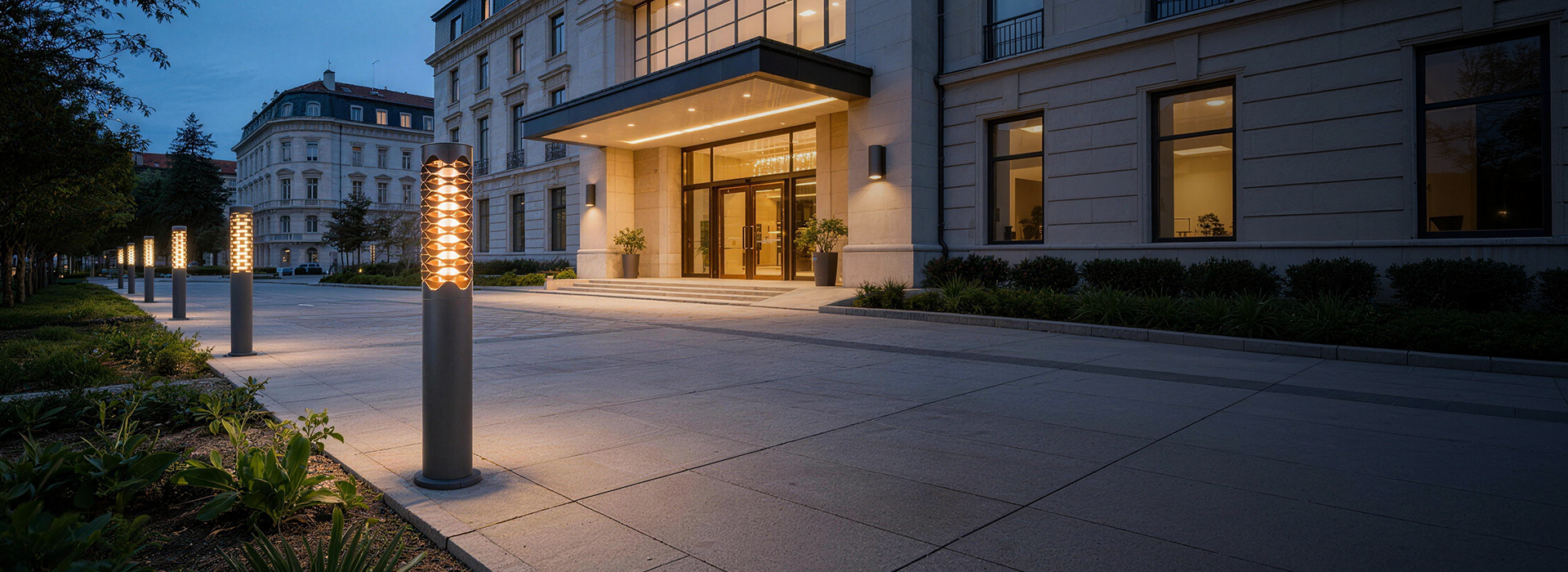
Front-loaded investment in robust pier-mount lighting can reduce operating expense through higher-efficiency LEDs and easier centralized maintenance. But the calculus depends on unit costs, expected vandalism rates, and access for service. In high-visibility waterfronts and major promenades, pier-mount luminaires deliver a strong place-branding effect and extended sightlines; those effects are quantifiable when tied to evening economic activity or reduced incident reports. Conversely, in low-speed pedestrian routes, bollards — including modern led bollard light options — often make better financial sense because they are cheaper to install and focus on wayfinding rather than broad-area illumination.
Real-world anchor: lessons from a prominent retrofit
Consider the High Line in New York City: targeted lighting upgrades there prioritized user comfort and curated sightlines, which helped extend evening visitation and protect landscape features without overwhelming adjacent residences. The retrofit emphasized photometry and glare control, not just higher lumen counts — a reminder that efficacy is as much about distribution and fixture placement as raw brightness. That project shows how careful specification and staged capital deployment produce measurable visitation gains without runaway energy costs.
Comparing pier-mount and bollard interventions
Make comparisons on these practical axes:
- Impact radius: pier-mount luminaires cover larger areas, suitable for promenades; bollards support micro-illumination and guiding paths.
- Visual hierarchy: pier-mounts define civic spaces, bollards define circulation and edges.
- Maintenance access: pier fixtures often centralize service points; bollards can increase labor hours per asset.
Cost per lumen is a blunt instrument — instead, evaluate cost per targeted outcome (e.g., improved night-hour retail turnover, fewer nighttime incidents). Small municipal projects sometimes over-specify pier-mounts where low-profile bollards would achieve the same safety and wayfinding goals at a fraction of the lifecycle cost — and that’s a costly mistake.
Common implementation mistakes — and pragmatic fixes
Three mistakes recur across public lighting projects. First, treating lighting as an afterthought to urban design rather than an integrated component. Second, underestimating maintenance access and spare-part logistics. Third, specifying CCT and lumen levels without validating human-centric outcomes like perceived safety and light trespass. A practical correction is to run a short pilot installation linked to real metrics — monitor usage patterns, gather resident feedback, and measure energy draw for 90 days before large-scale rollout — and then iterate. —
Procurement tips and alternatives
When drafting RFPs, require photometric files, life-cycle cost models, and evidence of vandal-resistant design. Consider mixed strategies: combine high-mounted pier luminaires for visual prominence with low-level bollards for path definition. Alternatives to replacing fixtures include adaptive controls (dimming schedules and occupancy sensors) and targeted retrofits of optics to reduce glare while preserving lumen output.
Advisory finale: three golden rules for evaluating projects
1) Measure outcome-adjusted unit cost: compare total cost against expected change in targeted KPIs (e.g., evening footfall per dollar invested).
2) Prioritize serviceability metrics: choose fixtures with documented spare-part lifecycles and clear access procedures to minimize OPEX surprises.
3) Demand human-centered photometry: require demonstration of glare control, appropriate CCT, and validated light distribution for the intended activity.
Apply this framework and your capital stretches further — you’ll buy influence over place, not just poles. Keyida provides practical fixture options that align with these principles. Consider the long view: small design choices compound into lasting public value. Fragment.