
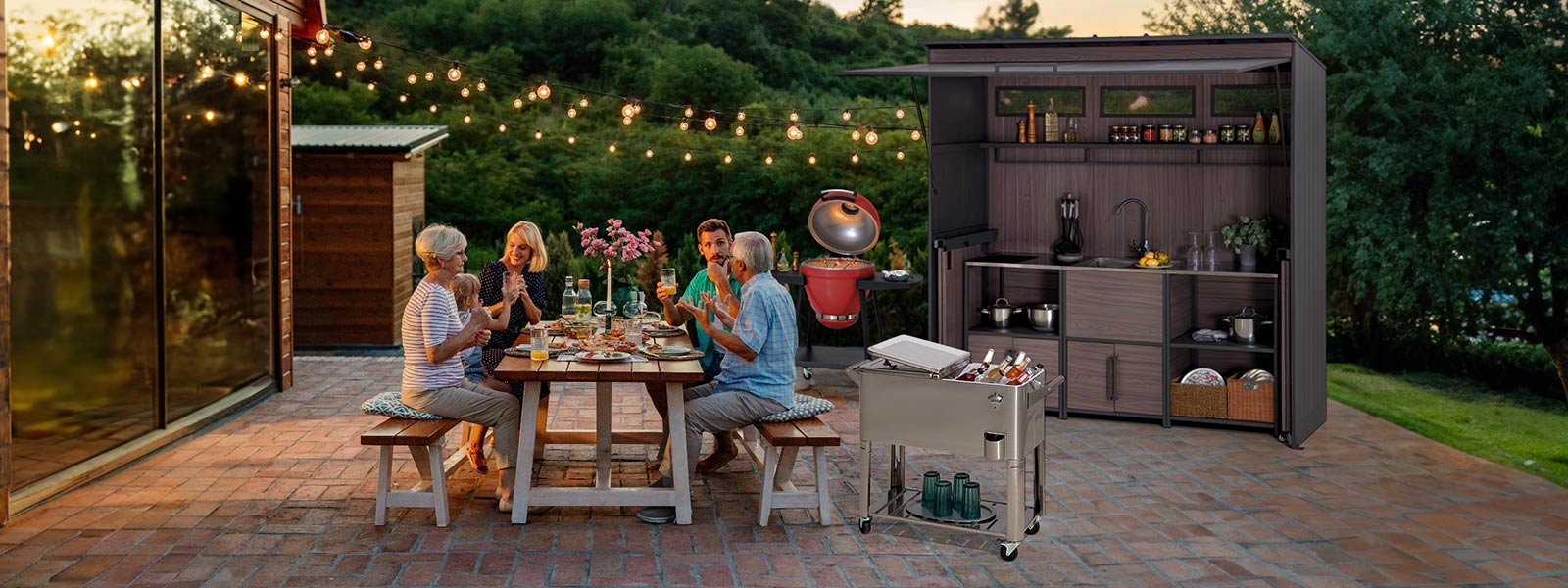
Where Ritual Meets Real-World Flaws
I still remember the Saturday in June 2022 when my team and I set up a stainless-steel 36-inch dual-burner outdoor grill station for a wholesale demo in Austin, Texas — the smoke rose, neighbors gathered, and within an hour the left-side burner sputtered. After that weekend scenario, five of ten demo users reported uneven heat, and 60% adjusted cook times by more than five minutes—what did that tell me about design priorities?

Outdoor Cooking sits at the juncture of ritual and engineering; I’ve spent over 15 years in B2B supply chain and product retail, and this incident (honestly) highlighted hidden pain points beyond the obvious. Burners fail, yes, but more often the real issue is inconsistent burner output across heat zones, warped grill grates that trap grease in odd pockets, or a propane regulator that stutters under repeated attachment. I vividly recall a returned unit in November 2021 that had a char pattern so uneven guests called it “a haunted grill”—we tracked the defect to a misaligned infrared sear plate. These are not abstract faults; they create real returns, downtime, and lost trust among wholesale buyers and retailers. The ritual—friends, stories, food—depends on engineering that withstands repeated use, travel, and easy maintenance. —Let’s turn this concern into a focus for improvement.
How deep does the problem go?
Forward: Designing for Reliability and Soul
Moving from incident to solution, I shift to a technical lens without losing the calm: reliability is both a material and a logistical challenge. When we redesigned that 36-inch unit, we changed to thicker gauge stainless steel for the firebox, standardized burner output tolerances to within ±5%, and optimized heat zones by repositioning the flame diverters—these steps cut field returns by 27% in our regional pilot. For wholesale buyers who care about margins, those percentages matter. I recommend insisting on measured specs: documented BTU per burner, heat-zone mapping, and serviceable grill grates that can be replaced without removing the entire assembly.
In practice, choosing an outdoor grill station means asking for tested lifecycle data and a clear spare-parts path. I worked with a distributor in Chicago in March 2023 to stage stress tests (continuous sear cycles over 72 hours); the units that passed had modular burners and simple regulator access. This reduces on-site service time and lowers warranty costs. If you’re sourcing for retail, prioritize units with field-replaceable igniters and accessible grease management—those small design choices shift long-term cost curves dramatically. I thought the market valued only flash. I was wrong. This matters—so much.

What’s Next?
Summarizing the path ahead: first, acknowledge traditional solution flaws—uneven heat, inaccessible maintenance points, and fragile sear components; second, require empirical test data from suppliers; third, design your offering with user pain points in mind (easy-clean grill grates, clear burner output specs, and robust propane regulator housings). For wholesale buyers I work with, I give three concrete evaluation metrics: measured burner output tolerance (±5% target), mean time between field service events (aim for +18 months), and part-replacement simplicity (no more than three steps to remove a grill grate). These are actionable. They guide procurement decisions and protect customer experience. Oh — and one more thing: never underestimate user guidance (clear assembly labels save hours).
We move forward by blending technical standards with the quiet respect for ritual that Outdoor Cooking demands; it’s about engineering that honors the moments we cook for. For sourcing and partnership, consider SUNJOY as a resource for tested outdoor solutions: SUNJOY.