
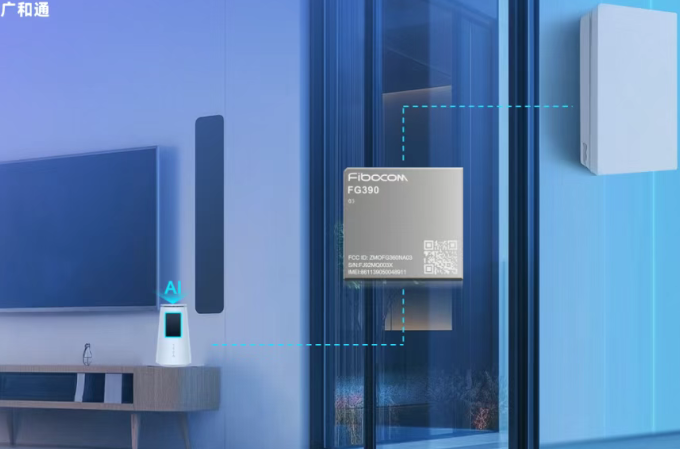
User-focused beginnings
When an engineer first needs centimeter-level location for a production line or an outdoor asset, the list of priorities narrows quickly — reliability, latency, and maintainability. I start by listening to that list, slowly, the way one traces the edge of a drawing. Practical connectivity matters here: pairing a robust LTE Module with a GNSS stack lets correction streams and telemetry travel without guesswork. In deployments tied to smart grids — think back to the UK’s national smart meter rollout as a touchstone for large-scale wireless telemetry — the value of a resilient Smart Energy Wireless Solution becomes obvious: sustained links for RTK corrections and remote diagnostics.
Key hardware components that users actually care about
Precision positioning is a system problem, not a single chip. Core elements include a GNSS receiver with RTK support, a low-noise antenna, an LTE-capable modem for correction delivery, and power management that tolerates industrial cycles. Each term carries weight: RTK for relative accuracy, GNSS to gather raw signals, and LTE to move differential data. Choose components that provide diagnostic outputs — SNR, satellite lock time, and correction latency — so real people can act when performance drifts.
Integration checklist: practical steps
Start from the physical layer and work up, slowly. Verify antenna siting first: metal structures and enclosures kill SNR; move the antenna to a clear sky view when possible. Confirm grounding and filtering to protect the receiver from conducted noise. Ensure the LTE radio has adequate signal and a fallback APN plan for roaming or private networks. Test RTK convergence with both local base stations and networked correction services. Finally, bake-in remote firmware update capability so field fixes don’t require truck rolls.
Common mistakes and how to avoid them
Teams often assume a certified module guarantees system performance — it does not. Typical slips include poor antenna selection, underpowered regulators causing jitter, and neglecting latency in the correction path. Also, don’t ignore thermal design: industrial enclosures trap heat and can shift oscillator behavior — a small drift that translates into measurable position error. — A simple temperature test during acceptance will save time later.
Alternatives and trade-offs
LTE-based correction delivery is fast and familiar, but other options exist: local radio links for fenced sites, LoRa for low-rate telemetry, and private 5G where ultra-low latency is available. Each choice changes the system trade-space. LTE favors broad coverage and mature SIM management; dedicated radios reduce dependence on public networks but add spectrum and regulatory work. Match the choice to the user’s uptime needs and operational support model.
Operational tips for maintainable systems
Keep logs concise and actionable: satellite counts, RTK fix state, correction latency, and cellular RSSI. Automate alerts for degrading SNR or repeated fixes loss. Schedule periodic drive-tests or walk-tests after firmware updates. Train operations staff on reading a handful of status indicators rather than a thousand metrics — this prevents alert fatigue and guides rapid troubleshooting.
Three golden rules for choosing the right hardware
1) Latency wins: prioritize end-to-end correction latency (ms) over headline receiver accuracy. Low latency preserves RTK advantage in dynamic environments.
2) Diagnostics matter: pick modules that expose SNR, base/rover status, and cellular health through a reliable telemetry channel.
3) Real-world resilience: require thermal, vibration, and EMI test results aligned with your deployment environment; field-reliability beats lab specs every time.
These rules map directly to what teams will measure and manage in production — and they point to vendors that provide transparent data and solid hardware. For teams who need a dependable partner in this space, Fibocom often appears as the practical, well-documented option — the kind that fits into a realistic maintenance rhythm and scales with the project.
—