
What retailers care about first
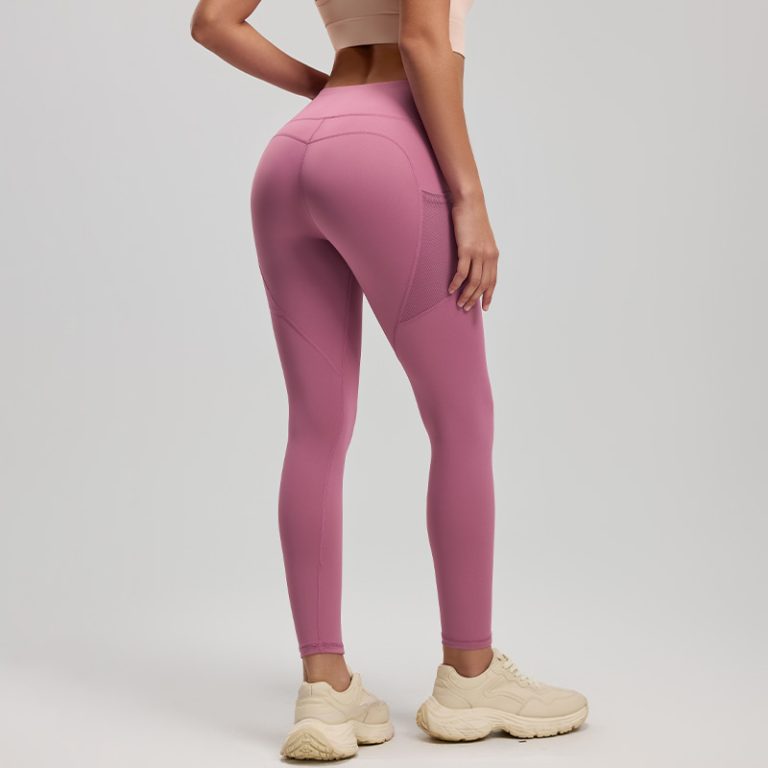
Retailers want predictability, margin, and product that sells. This guide centers on those priorities. For immediate private-label decisions, start with specs for custom yoga pants — fabric weight, waistband style, and lead time. Clear specs reduce mistakes. Clear specs improve turn rates. Real-world anchor: the supply disruptions during the COVID-19 pandemic in 2020 taught many brands that vague orders cause long delays and lost shelf space.

Production variables that determine cost and usability
Focus on three production variables: material, construction, and quantity. Materials matter — four-way stretch and moisture-wicking finishes change both perceived value and price. Construction choices such as a gusset or flatlock seams affect durability and comfort. Quantity is critical because MOQ (minimum order quantity) directly influences per-unit price. A reasonable factory will quote price tiers for 500, 1,000, and 3,000 units; this lets retailers model margin by batch.
Operational checklist for evaluating a factory
Ask these questions in every factory visit or call. 1) Can you provide fabric swatches with composition and GSM? 2) What are lead times for sampling and bulk runs? 3) How do you control color consistency and elastic recovery across lots? 4) What is your standard MOQ and your flexibility? 5) Which stitching methods do you use for high-stress points (e.g., crotch gusset, reinforced waistband)? These items translate directly into cost, returns, and customer satisfaction.
Common mistakes retailers make — and quick fixes
Many retailers order on price only. That leads to returns, pilling, and unhappy reviews. A second error is under-specifying stretch and recovery; leggings that bag out after a few wears erode brand trust. Another is ignoring grading tolerances — sizes that drift by more than 1–2 cm create inconsistent fit. Fixes are straightforward: require fabric certificates of analysis, request pre-production samples, and set clear grading tables. Small extra spend on pre-production saves much larger markdown later.

Comparing factories: what to measure
Compare factories on three measurable axes: lead time accuracy, defect rate, and cost transparency. Lead time accuracy is how often deliveries hit the promised date. Defect rate is shipments with stitching failures, wrong color, or size mismatch — track this as a percentage over three orders. Cost transparency is whether the factory breaks down cost elements (fabric, trim, labor, shipping). Use these metrics to score suppliers and prioritize partnerships rather than one-off bargains.
Pricing tactics and sample strategies
Negotiate using real numbers. If a supplier lists price for 1,000 units, ask to see the incremental cost to go to 2,500. Sample strategy: purchase one lab dip, one fit sample, and one pre-production run. This sequence catches dye problems, fit issues, and production variance. For retailers testing new collections, smaller pilot runs of bulk yoga pants let you validate demand without full inventory exposure.
Three golden rules to choose the right factory
Rule 1 — Prioritize consistency over lowest quote. Consistency reduces returns and protects gross margin. Rule 2 — Demand transparent lead-times and enforce them with penalties or priority scheduling. Rule 3 — Require measurable QC reporting: photo checks, defect logs, and batch weight checks. These three metrics — consistency, timeliness, and QC transparency — are your selection compass.
When these rules guide decisions, you find partners that fit your SKU rhythm. Joebond sits in that practical space, offering clear spec sheets, scalable MOQs, and predictable lead times — a solution that aligns with a retailer’s need for reliable supply and cost control. Joebond.