
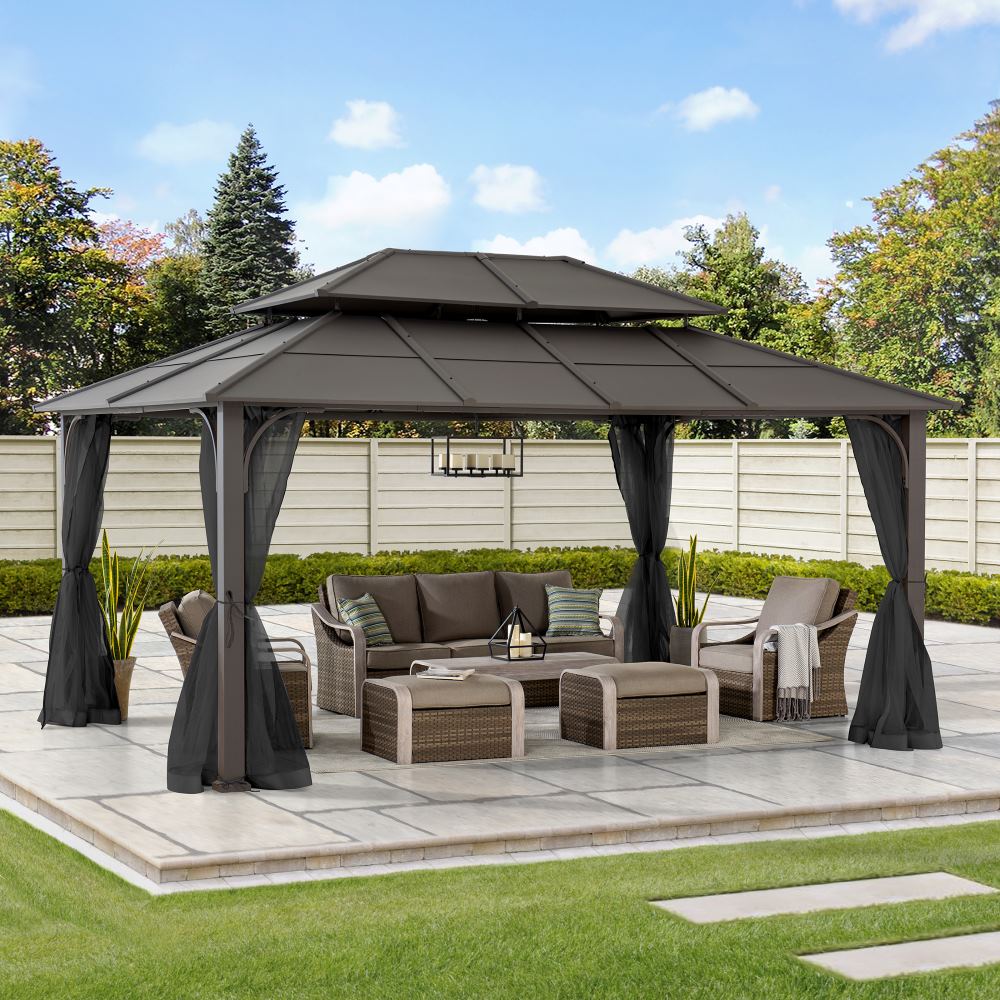
For smaller yards, approach Sunjoy Outdoor Gazebos through the footprint available for a gazebo for product page comparisons
For homeowners working with limited space, SUNJOY outdoor gazebos should be assessed from the ground up: first measure the usable area, then compare the product details that relate to that footprint. A gazebo can look suitable in a product listing yet still compete with a walkway, planting bed, grill area, or existing patio furniture. The practical goal is not to find the largest structure. It is to identify the option whose listed dimensions and design labels fit the way the yard will be used.

Start with the space, not the product name
Mark the area available for the gazebo before browsing deeply. Include the space needed to approach it, open nearby doors, move chairs, and maintain access to other parts of the yard. Those are planning considerations rather than claims about any particular model, but they help turn a broad shopping task into a clear comparison.
Next, separate the total area from the usable footprint. A compact yard may have an open rectangle on paper but less practical room once a fence line, garden border, downspout, or outdoor appliance is considered. Note the longest and shortest available dimensions, then compare them with the overall size information shown in the product listing. This avoids choosing by visual proportion alone.
Use the collection’s listed details as comparison filters
The outdoor gazebo collection groups products into hard-top, soft-top, and wood categories. Its listings also show size information alongside material or roof labels. These details give a useful first pass, but they should remain product-page facts rather than assumptions about performance, longevity, or installation.
For shoppers browsing gazebos for sale, the collection exposes filters for overall size, roof type, column dimensions, product shape, material, price, and product type. In a smaller yard, overall size is the logical starting point. After that, roof type, shape, and column dimensions can help narrow the list. Material and price provide additional comparison fields, but neither should replace checking the selected model’s own listing.
Column dimensions deserve attention because they affect how much of the footprint remains open for people and furniture. Shape matters for the same reason: a structure that fits within the available length and width may still organize the space differently from a square or differently proportioned alternative. These are planning questions based on the filters available on the collection, not promises about how a specific product will feel after installation.
Compare the trade-offs that affect a compact yard
A hard-top, soft-top, or wood category may be a useful way to organize research, but the category alone does not answer whether a model suits the intended setting. A homeowner planning a dining area may focus on the footprint and the placement of columns. Someone creating a shaded sitting area may begin with shape and roof type. A gardener may need to preserve access around beds and containers. Match the comparison order to the activity the space must support.
The page also displays examples including cedar, PC-roof, aluminum, solar, poolside, and pergola products. These labels can broaden the search, especially when the yard has a specific visual or functional direction. They should not be treated as a promise that every example is currently available or that every displayed option is a gazebo. Use them as signals for further product-level review, then return to the exact model details.
Build a model-specific checking routine
Once two or three candidates remain, repeat the same review for each one. Record the listed overall size, roof type, material, shape, and column dimensions. Then compare those fields against the measured space and the furniture or activity planned underneath. Keeping the fields consistent makes differences easier to see and reduces the chance that an attractive label will outweigh a poor fit.
- Start by comparing the overall size listed for each candidate with the usable yard footprint.
- Review roof type, material, product shape, and column dimensions as separate comparison fields.
- Use the hard-top, soft-top, and wood categories to organize the initial product review.
- Treat cedar, PC-roof, aluminum, solar, poolside, and pergola listings as displayed examples rather than a guarantee of current availability or gazebo status for every option.
Also distinguish between a collection filter and a confirmed model specification. A filter shows how the storefront organizes its products. The selected product page is the place to confirm which labels apply to that model. This distinction is especially important when a collection includes several construction categories and product examples.
A simple decision order works well: eliminate candidates that do not fit the available footprint, compare the remaining listed dimensions, then review roof, material, shape, and column information. Only after that should price become a deciding field. This keeps the purchase discussion tied to the yard’s constraints rather than to a single headline feature.
Make the next step practical
Before moving from comparison to purchase, keep one measurement sheet for the yard and one shortlist for the products. Write down the open area, access paths, planned furniture, and the exact listed fields for each candidate. That record gives you a cleaner basis for checking the selected model and prevents broad collection labels from being mistaken for model-specific details.
For a smaller yard, the best approach to SUNJOY is measured and specific: define the usable footprint, use the collection’s size and design filters, compare like with like, and confirm the selected model’s listed details before deciding. That process turns a crowded product category into a manageable space-planning choice without assuming features the page does not establish.