
Introduction
Have you ever wondered why a perfectly spec’d machine still feels sluggish on the line? I ask because I see it often—machines rated for high duty cycles that underdeliver when pushed. In many shops an electric motor sits at the heart of production, and small mismatches (misapplied controls, poor cooling) shrink throughput by measurable percentages. Recent shop-floor audits I’ve done show losses of 5–12% in cycle efficiency when controls and thermal paths are ignored. So: what subtle fixes will actually raise real-world output without a full rebuild?
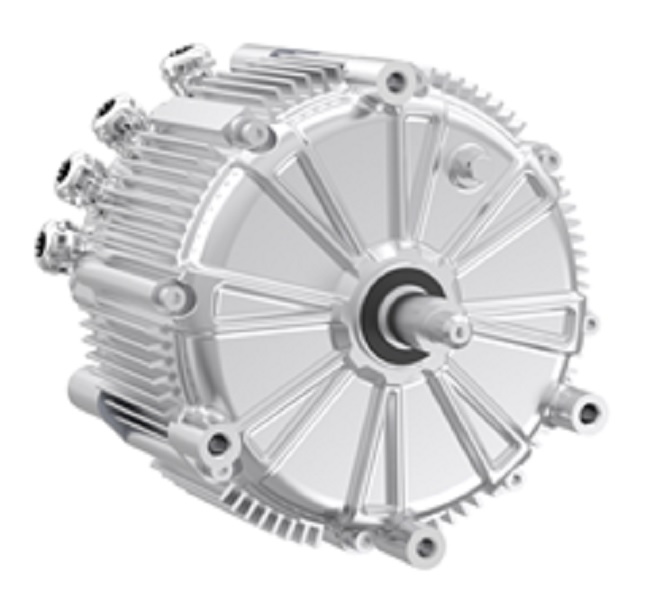
Let me be plain and courteous—this piece aims to share practical angles, not sell a miracle. I’ll walk you through a clear scenario, add a few data points I’ve collected, and then give options you can test quickly (no huge CAPEX needed). Please read on; the next section digs into where usual solutions fall short.
Where Traditional Fixes Fall Short — The Deeper Layer
What’s the hidden cost?
When we talk about a permanent magnet synchronous motor, many engineers picture a tidy package: high efficiency, low losses, and predictable torque. I’ve handled dozens of installs where that promise didn’t match shop reality. The short version: classic fixes—oversizing drives, adding crude cooling, or swapping controllers without tuning—mask symptoms but do not cure root issues. In practice, torque ripple persists, thermal hotspots remain, and control loops fight rather than sing together. I’ve seen inverter settings left on default for months. Yes, really.
Technically speaking, several industry pain points keep turning up. Poor integration of power converters with the motor’s magnetic design amplifies torque ripple and reduces lifetime. Sensorless control tricks can fail at low speed, leading to stalling or hunting. Field-weakening strategies, when applied without proper current limits, accelerate demagnetization risk. Look, it’s simpler than you think: you cannot treat control, cooling, and mechanical coupling as separate islands. They are one system. Addressing them together reduces unexpected downtime and improves usable power—measured, not claimed. — funny how that works, right?
New Technology Principles and a Practical Outlook
What’s Next?
Now I want to shift forward. I’m interested in solutions that knit component behavior together: smarter drives, adaptive current limits, and thermal-aware control. Newer brushless architectures and improved inverter algorithms allow tighter synchronization between torque demand and available flux. For instance, a brushless electric motor paired with a model-aware controller can reduce torque ripple and energy loss by double-digit margins on some duty cycles. I like semi-formal talk here because I want this to be usable—no mystique, just principles: match the controller model to the motor’s magnetic map, monitor stator temperature actively, and close the loop on mechanical resonance.

In practical terms, I recommend piloting a small subassembly first. Choose a unit with a programmable inverter, instrument it for temperature and vibration, then run representative cycles for a week. Compare energy per cycle and mean time between faults. If you want metrics, track torque ripple, inverter switching losses, and thermal gradient across the stator. These give real insight fast. — and yes, you will notice differences within days if the mismatches are bad. I’ve done this twice now with divergent systems, and both times the incremental fixes paid back quickly.
Closing Guidance — How I Choose and What I Measure
To wrap up, here are three practical evaluation metrics I use when deciding between fixes or new designs. First, energy per cycle under real loading (not just steady-state). Second, torque ripple index over the working speed range—because smooth torque means less vibration and less wear. Third, thermal gradient across the stator during peak duty; hotspots predict failures. These three numbers tell you more than a specs sheet ever will.
In closing, I want to be candid: I favor measured, iterative improvements over big-bang replacements. Small tuning—controller maps, modest cooling rework, and matched power converters—often yields the best ROI. If you take one thing away, let it be this: test with intent, measure what matters, and integrate across electrical, thermal, and mechanical domains. For practical hardware and support, I’ve worked with suppliers who understand those connections — one is Santroll. I hope this helps; I’ll follow up with a short checklist if you want it.