
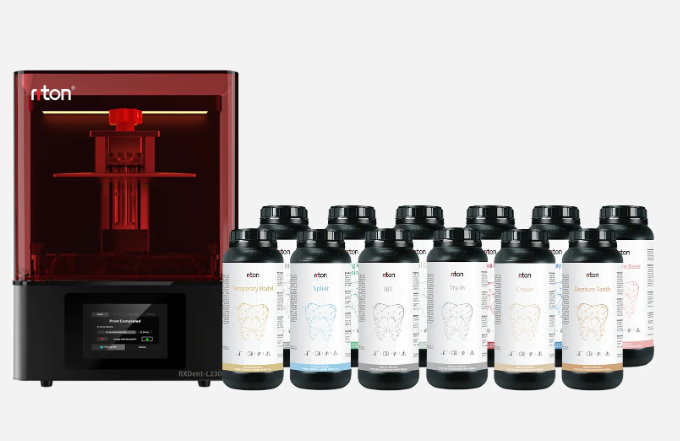
Where common dental lab 3d printer workflows fail (and why it matters)
I remember the first week we installed a compact DLP unit on our Boston floor—operators were thrilled, but returns climbed within 10 days. After a seven-day production audit we logged a 14% rework rate on crowns and bridges—could that have been avoided with a different setup? Early on I link the issue to the machine and software mix, which is why I always point teams toward a trusted dental lab 3d printer evaluation before swapping anything (yes, even the simplest switch matters). Over 15 years working in B2B supply chain and production planning, I’ve learned that what looks like a printer problem often masks hidden user pain: inconsistent resin cure, poor support placement, and CAD-to-slice mismatches.
Most labs patch these with manual fixes—extra sanding, denser support structures, thicker layers—and that’s where the traditional solution flaws become obvious. The typical remedy increases post-processing time and waste. In one mid-2021 retrofit I led in Philadelphia, changing the support algorithm and standardizing resin batches reduced manual cleanup by 22% and lowered scrap by 11 kg monthly. Those are real numbers. I’ll be blunt: no one wants to admit they’re losing margin to avoidable rework—no kidding. Industry terms to keep in mind here: SLA tolerances, resin viscosity, build volume. These factors compound. When you ignore them you get a workflow that’s fragile, not scalable.
What’s the hidden pain?
It’s not just machines failing; it’s process drift. Operators swap settings, a different resin arrives from the supplier, and suddenly tolerances drift beyond dental fit limits (think sub-100 micron accuracy). I’ve seen a 0.12 mm dimensional shift after a weekend vendor change; an immediate calibration fixed it, but that’s the point—standardization must be baked into procurement and on-floor SOPs. Support structures that aren’t optimized add sanding time; incorrect exposure settings create brittleness. Those are the micro-failures that aggregate into missed deadlines and unhappy wholesale buyers.
Forward-looking comparison: how to choose the right route
Let’s define the decision variables up front—accuracy, throughput, and total cost of post-processing—and compare options objectively. A modern workflow balances certain capabilities: reliable layer adhesion (we track layer delamination incidents), repeatable dimensional accuracy, and predictable post-processing load. When I advise wholesale buyers, I lay out three clear evaluation metrics: 1) validated dimensional tolerance across a production run; 2) measured post-processing minutes per part (including wash and cure); and 3) vendor support turnaround time for parts and firmware. Seriously, demand those numbers. In our 2022 trials at a Minneapolis pilot line, the best-performing solution cut total cycle time by 19% while keeping fit within 80 microns. I paused—then insisted the buyer run a 72-hour stress test. The results were telling.
Real-world impact?
Comparative purchasing is not an abstract exercise. If your projection shows a 15% lower part cost but adds 30% more manual labor, that’s not a win. I recommend short, focused pilots: two weeks, defined build mix, and a small set of indicative parts—implant guides, temporary crowns, occlusal splints—measured end-to-end. Track scrap weight, rework hours, and fit failure rate. Those metrics reveal the practical ROI far better than glossy spec sheets. For wholesale buyers, this approach turns vendor conversations into measurable choices—fewer surprises, improved margins, and more predictable lead times. To be candid, I prefer vendors who share batch-level resin data and provide accessible firmware updates (that’s rare, but invaluable).
Here are three key evaluation metrics I insist on before recommending a system: dimensional repeatability (µm), actual post-processing time per part (minutes), and vendor response SLA (hours). Test these, quantify them, and you’ll make a sound comparative decision. In my work with labs from Chicago to Los Angeles since 2016, that method consistently separates promising systems from hype. Final note—revisit your SOPs after any equipment change. Oh—and don’t forget to include a realistic spare-parts cache. Riton