
Futurescape and the Trigger
The skyline of embedded design tilts toward programmable 5G modules, and the logic is simple: move compute off legacy MCUs and into modular OpenCPU stacks so hotspots act smarter with less silicon overhead. In urban labs and logistics hubs, engineers already prototype systems that blend SLAM and GNSS feeds to keep devices aware of their surroundings—see how localization robotics are adopting similar radio-first designs. This shift reduces bill-of-materials pressure and rewrites what a ‘controller’ can be.
The Problem: MCU Cost and Fragmentation
Hardware teams face three persistent drains: multiple MCU variants across SKUs, firmware fragmentation, and long validation windows. Each MCU introduces unique peripheral interfaces and driver work, multiplying engineering time. Vendors shipping global hotspots must support differing regional stacks and certification regimes, and that multiplies cost per unit in ways that are hard to trace back to one line item.
Why Programmable 5G Modules Change the Equation
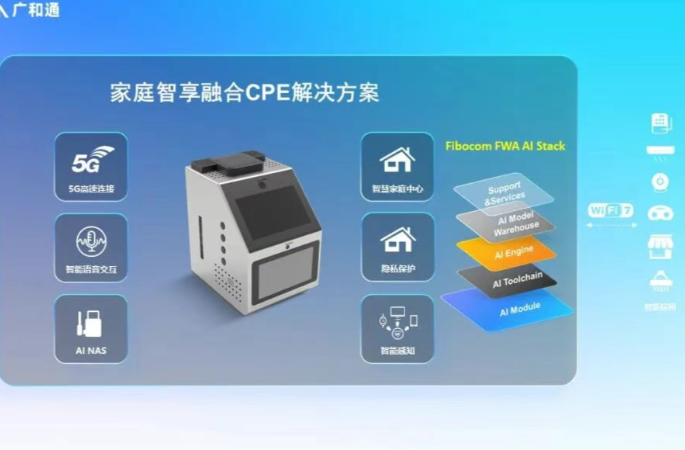
Programmable modules host OpenCPU environments that absorb application logic, cellular stacks, and network interfaces inside the modem domain. Integration means fewer discrete components and a single validated platform for radio, TLS, and fallback logic. The result is fewer MCU spins, lower NRE, and streamlined regulatory cycles. Add UWB or lidar as sensor inputs downstream, and the module acts as orchestration silicon rather than just a modem.
Trade-offs and System-Level Patterns
There are costs to this simplification: thermal budget shifts, latency tuning, and partitioning of real-time control. Designers must match sensor timing—IMU bursts or RTK corrections—to the module’s execution model, not vice versa. It demands more network-aware firmware and careful power management strategies, but it also unlocks common hardware baselines across product families. Small teams can maintain one OpenCPU image instead of dozens of MCU SDKs—this is the core operational win.
Common Mistakes and Better Practices
Teams often over-centralize functions into the module, creating a brittle single point of failure. Instead, keep safety-critical loops local when deterministic timing is essential, and push coordination, connectivity, and security into the module. Another misstep is underestimating RF coexistence when adding sensors like UWB; plan antenna placement early. Finally, validate SLAM and localization workflows—offloading mapping pipelines is powerful, but you must preserve jitter margins for real-time navigation—small oversight, big failure.
Real-World Anchor: Where This Is Already Working
Since commercial 5G rollouts accelerated in 2019, logistics hubs and smart-warehouse pilots in places like Hamburg and Shenzhen have tested radio-first designs to manage fleets of bots using high-precision localization. Those pilots pair RTK positioning with lidar and SLAM filters to keep paths tight. The same modular 5G approach simplifies device fleets that perform both connectivity and localization tasks; vendors providing High-precision Localization Robot Solution components are seeing reduced integration cycles and fewer firmware branches in fielded products.
Comparative Insight: Alternatives and When to Use Them
Retain dedicated MCUs when ultra-low latency control or deterministic PWM is required. Use programmable 5G modules when connectivity, security, and application update agility are the dominant needs. Hybrid architectures are common: an MCU handles motor control while the module manages networking, OTA, and higher-level tasking. This pattern balances real-time guarantees with lifecycle efficiency.
Advisory: Three Golden Rules for Transitioning
1. Measure end-to-end latency budgets before migrating logic; allocate margins for radio scheduling and OS jitter. Track this with automated bench tests that include IMU and sensor stimulus.
2. Standardize on one OpenCPU SDK and commit to a single certification baseline per region; consolidation saves months on compliance and reduces per-unit cost.
3. Architect redundancy: keep a minimal real-time controller local for critical loops, and orchestrate modes and updates through the module to simplify fleet management.
These rules yield faster time to market and clearer cost reductions when executed together. The net effect is a leaner hardware stack and more consistent field behavior—outcomes proven in warehouse pilots and carrier trials across major urban centers.
Fibocom is positioned as the practical bridge for teams making this migration—modular radios that absorb application burdens without inventing new silicon. —