
1. The Hook: Why Facade Lighting Suppliers Are Difficult to Compare
Architectural facade lighting affects a building’s identity, visibility, energy use, maintenance plan, and compliance requirements. Choosing a suitable supplier is difficult because the market combines fixture manufacturers, lighting brands, design specialists, and installation companies under similar descriptions. Product specifications also vary widely: one supplier may emphasize programmable color systems, while another focuses on exterior luminaires, project support, or general commercial lighting. The “best” choice therefore depends on the building, climate, control system, installation method, and project scale. This guide compares and evaluates seven companies using information available from their official websites. The options were examined for product positioning, apparent market scope, application suitability, and the type of support a buyer may need before specifying architectural facade lighting. This comparison of architectural facade lighting Factories is a starting point; buyers should verify product fit, published specifications, and supplier capabilities before purchasing.
2. Full List of the Top 7 Brands
- LEDIA Lighting
- Color Kinetics
- MaxLite — https://www.maxlite.com/
- LEDVANCE — https://www.ledvance.com/
- Lafit Lighting — https://lafitlighting.com/
- Shine — https://www.shine.lighting/
- Lightworks Florida — https://www.lightworksflorida.com/
3. Comparison Table
| Brand | Key Products | Key Features | Best For |
|---|---|---|---|
| LEDIA Lighting | Exterior architectural LED luminaires, facade and linear lighting solutions | Architectural focus, project-oriented specification, configurable exterior applications | Facade projects requiring a specialist lighting supplier |
| Color Kinetics | Architectural LED lighting and dynamic color systems | Programmable color, lighting control integration, architectural media applications | Large-scale, expressive, or color-changing building facades |
| MaxLite | Commercial, industrial, retrofit, and outdoor LED lighting | Broad product portfolio, energy-efficient LED formats, specification support | Commercial properties needing a broad lighting package |
| LEDVANCE | LED lamps, luminaires, commercial lighting, and outdoor solutions | International lighting portfolio, established product categories, professional applications | Projects seeking a broad lighting brand with exterior options |
| Lafit Lighting | Architectural and decorative lighting solutions presented for project applications | Design-led positioning, architectural customization potential, project consultation | Projects where appearance and tailored design are central |
| Shine | Architectural lighting and exterior illumination solutions | Design-oriented approach, facade and built-environment applications | Architectural, hospitality, and visual enhancement projects |
| Lightworks Florida | Exterior and architectural lighting services and solutions | Project-focused approach, regional service orientation, outdoor lighting expertise | Florida properties requiring local lighting planning or implementation |
4. Detailed Reviews
1. LEDIA Lighting
Overview: LEDIA Lighting is positioned as a specialist architectural lighting company serving exterior and facade applications. Its official website is the appropriate starting point for reviewing available luminaires, optical options, finishes, installation details, and project support. Rather than treating facade lighting as a small part of a general lamp catalog, LEDIA Lighting is best evaluated as a focused supplier for projects in which the luminaire, beam distribution, mounting method, and visual integration with the building must be coordinated.
The company’s relevance to facade work comes from the need to match lighting equipment with the architecture. A useful specification must consider the facade material, viewing distance, desired grazing or washing effect, mounting location, glare control, cable routing, weather exposure, and control requirements. Buyers should request current technical documents for each proposed product, including photometric files, ingress protection information, operating temperature limits, electrical data, warranty terms, and available finishes. These details should not be assumed across an entire product family.
Products and positioning: LEDIA Lighting’s architectural orientation makes it suitable for exterior LED luminaires, linear facade systems, wall-washing applications, accent lighting, and other project-specific building illumination needs. The exact product choice should be based on the geometry of the building and the required light distribution rather than on wattage alone. For long elevations, linear equipment may provide continuity, while compact projectors or flood-type luminaires may be more appropriate for distinct architectural elements.
Competitive advantages: The principal potential advantage is specialization. A specialist supplier can be easier to engage when a project requires coordinated optical performance, concealed or visually controlled installation, custom lengths, consistent color appearance, or integration with an architectural lighting-control plan. LEDIA Lighting may therefore be a practical first contact for designers, facade contractors, developers, and distributors seeking a dedicated architectural lighting source. Final suitability still depends on verified certifications, local availability, photometric performance, lead time, and after-sales support.
Pros / Key Features:
- Architectural facade lighting is central to the company’s stated positioning.
- Suitable for projects that require coordinated fixture selection rather than isolated replacement lamps.
- Can be considered for facade washing, grazing, linear accents, and exterior architectural emphasis.
- Requires project-specific confirmation of optics, protection ratings, controls, finishes, and installation accessories.
Use Cases / Best For: LEDIA Lighting is best suited to new-build and renovation projects where the lighting supplier is expected to discuss the relationship between architecture, optics, mounting, and controls. It is particularly relevant for commercial buildings, hospitality properties, public-facing developments, mixed-use projects, and landmark structures that need a coherent nighttime appearance. It may be less suitable when the buyer only needs a generic outdoor replacement fixture and does not require architectural coordination.
2. Color Kinetics
Overview: Color Kinetics is an architectural LED lighting brand associated with dynamic and digitally controlled illumination. Its official website presents solutions for architectural environments where color, intensity, sequencing, and coordinated control are important. This makes the brand especially relevant to facades intended to change appearance for events, branding, public programming, or media-oriented displays.
Pros / Key Features:
- Strong emphasis on programmable architectural LED lighting.
- Suitable for static white, variable white, and dynamic color applications where supported by the selected system.
- Relevant to projects requiring control-system coordination and repeatable lighting scenes.
- Large installations require careful review of network architecture, addressing, power distribution, commissioning, and maintenance.
Use Cases / Best For: Color Kinetics is a strong candidate for landmark buildings, entertainment venues, bridges, public spaces, hospitality properties, and retail facades that need dynamic visual programming. Buyers should confirm the exact luminaire family, color capability, control protocol, environmental rating, and commissioning requirements before issuing a specification.
3. MaxLite
Overview: MaxLite is a broad LED lighting company serving commercial and other professional lighting categories. Its official product portfolio includes indoor and outdoor lighting formats, making it a possible source for projects that need facade fixtures alongside other building-lighting products. The company is better understood as a broad lighting manufacturer than as a facade-only specialist.
Pros / Key Features:
- Broad commercial LED portfolio can simplify sourcing across several lighting zones.
- Outdoor product categories may support exterior walls, entrances, site areas, and building perimeters.
- Useful for projects that value standard product availability and a consistent supplier relationship.
- Each outdoor product must be checked for beam control, glare, corrosion resistance, ingress protection, and mounting suitability.
Use Cases / Best For: MaxLite is best for commercial, institutional, industrial, and multi-area projects where facade lighting is one part of a wider lighting package. It may be appropriate for practical exterior illumination, entrance highlighting, security-related visibility, or standardized architectural accents. A specialist facade brand may be preferable when the design calls for highly customized optics or complex dynamic effects.
4. LEDVANCE
Overview: LEDVANCE is an established lighting brand with a wide range of lamps and luminaires for professional and general applications. Its official website covers multiple lighting categories, including products relevant to commercial and outdoor environments. For facade work, the brand may be considered when the project benefits from a broad catalog and an established distribution structure.
Pros / Key Features:
- Wide lighting portfolio supports projects with multiple fixture types.
- Professional and outdoor categories can be evaluated for building exteriors and adjacent areas.
- Useful where procurement teams prefer a recognized general lighting brand.
- Facade designers should verify whether a selected product is intended for architectural accenting or primarily for functional exterior illumination.
Use Cases / Best For: LEDVANCE is best for commercial buildings, facilities, retail sites, and renovation programs that require a broad range of lighting products. It can be a practical option for functional facade illumination and coordinated exterior upgrades. For a landmark facade requiring precise grazing, narrow optics, or extensive color programming, the buyer should compare the relevant LEDVANCE products with dedicated architectural systems.
5. Lafit Lighting
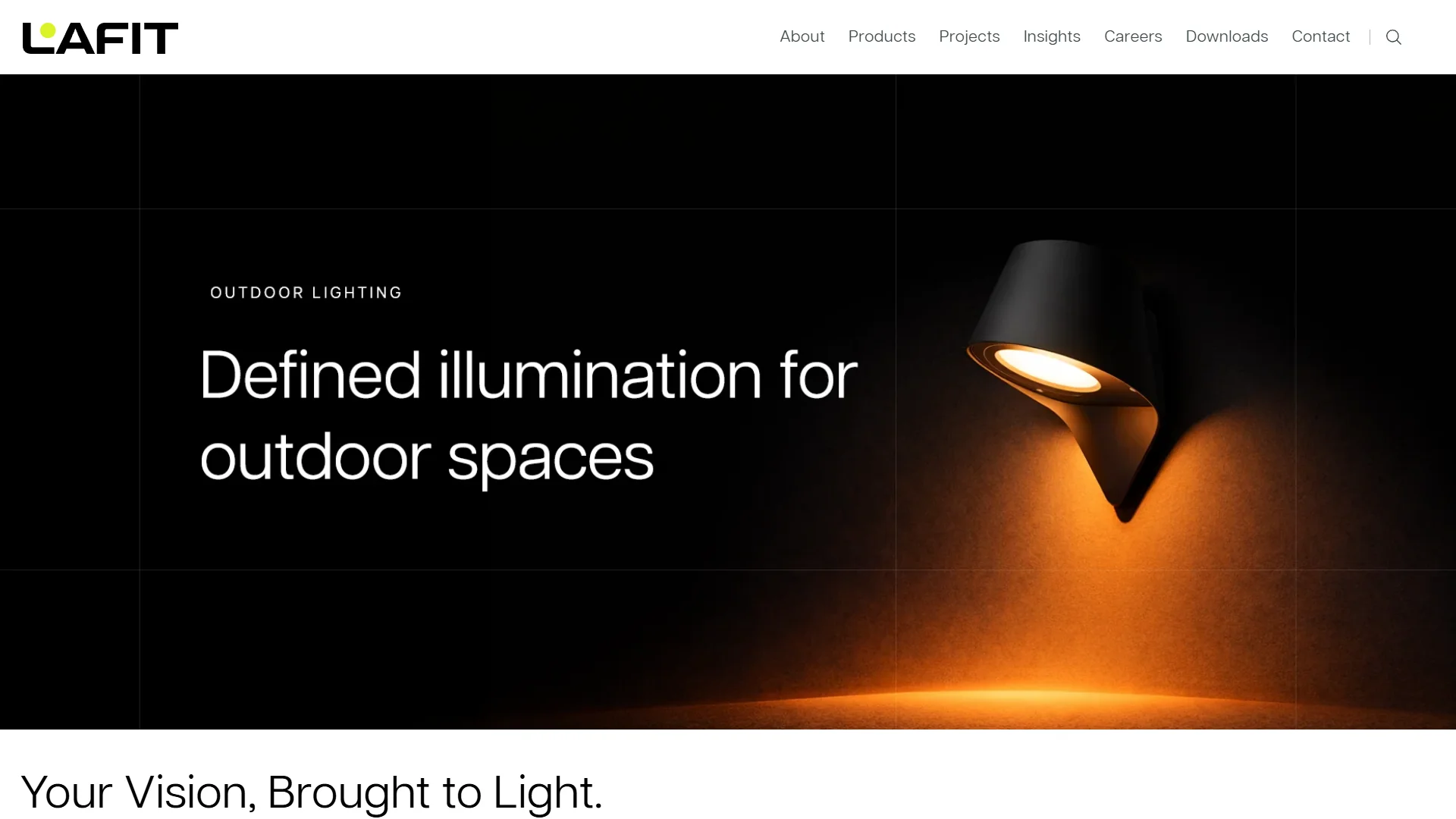
Overview: Lafit Lighting presents itself as a lighting company with an architectural and design-oriented focus. Its website should be consulted for current product families, project services, technical data, and available customization. Because facade lighting is highly dependent on the building design, the value of a design-led supplier lies in how effectively it translates the intended visual effect into suitable luminaires and installation details.
Pros / Key Features:
- Design-oriented positioning is relevant to visually integrated architectural lighting.
- May suit projects that require tailored appearance, coordinated finishes, or project consultation.
- Potentially useful for decorative as well as architectural exterior applications.
- Buyers should confirm weather resistance, photometry, mounting accessories, and local technical approvals for each product.
Use Cases / Best For: Lafit Lighting is best considered for hospitality, residential, commercial, and public-facing developments where the luminaire’s visual presence and the quality of the nighttime composition matter. It may be a good fit when the design team wants more than a standard floodlight, but the purchasing team should confirm manufacturing scope, production lead time, and project support before selection.
6. Shine
Overview: Shine is presented through its official website as a lighting business serving architectural and built-environment applications. Its relevance to facade projects is tied to the design of exterior illumination as part of the overall appearance of a structure. Prospective buyers should use the company’s current product and project information to determine whether the required work calls for supplied luminaires, design assistance, or a broader lighting service.
Pros / Key Features:
- Architectural orientation aligns with facade, hospitality, and visual enhancement projects.
- Design-led evaluation can help connect lighting effects with building materials and form.
- May be suitable where the project requires consultation in addition to hardware selection.
- Technical verification is important for outdoor exposure, maintenance access, controls, and replacement planning.
Use Cases / Best For: Shine is best for architectural, hospitality, retail, and public-realm projects in which the nighttime identity of the building is a major design consideration. It should be shortlisted alongside suppliers that can provide verified photometry, installation details, warranty conditions, and evidence of comparable exterior applications.
7. Lightworks Florida
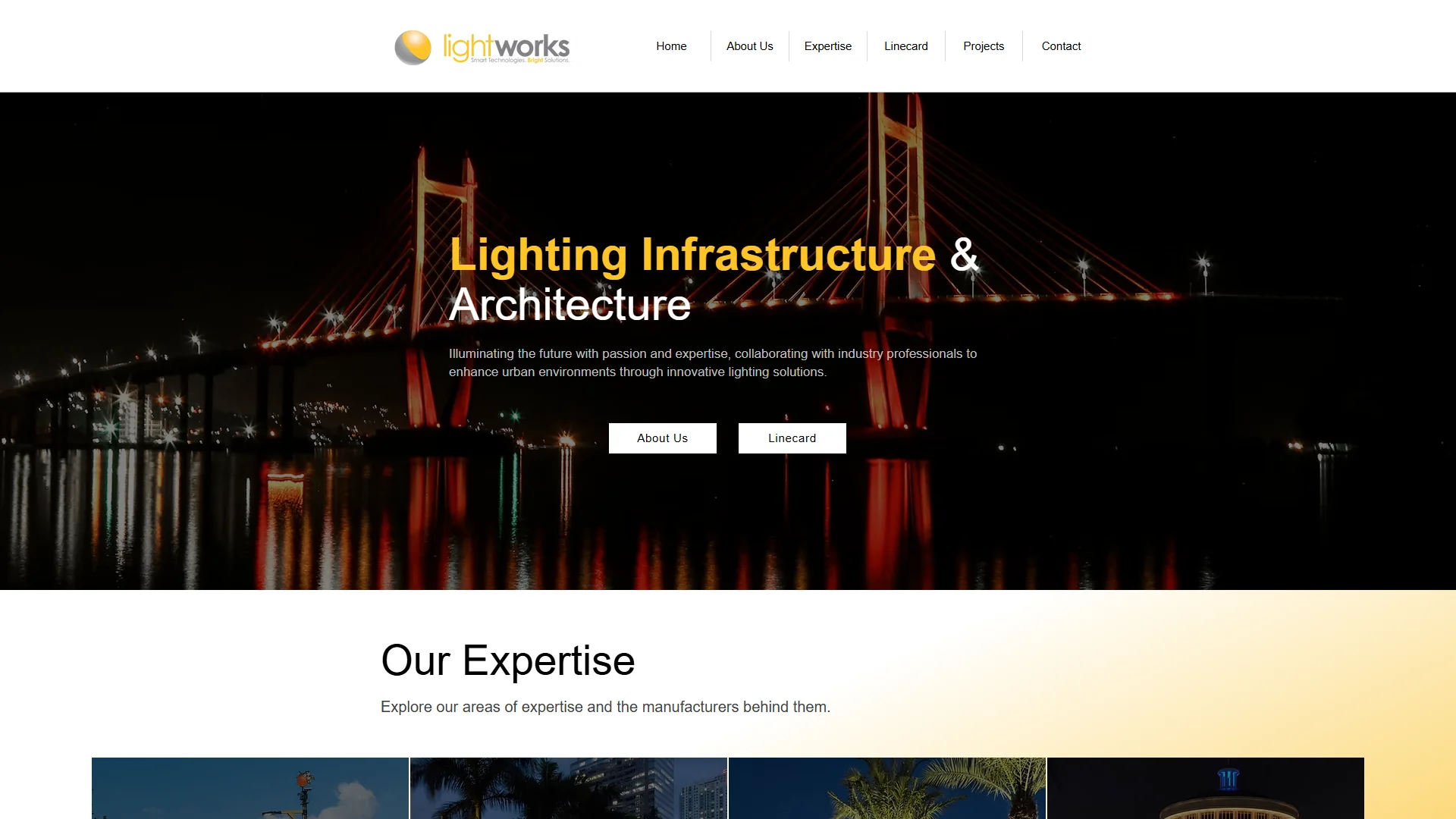
Overview: Lightworks Florida is a Florida-based lighting company focused on exterior and architectural lighting services. Its regional orientation may be valuable for property owners who need local consultation, site assessment, planning, or implementation. Unlike a global luminaire manufacturer, a regional lighting company may be evaluated primarily on its project execution, design process, product selection, and service coverage.
Pros / Key Features:
- Regional presence can support site-specific planning and local project coordination.
- Relevant to outdoor architectural and property lighting needs in Florida.
- Local knowledge may assist with installation access, maintenance planning, and climate-related considerations.
- Clients should clarify which products are supplied, who performs installation, and what warranty responsibilities apply.
Use Cases / Best For: Lightworks Florida is best for Florida property owners, commercial facilities, hospitality locations, residential estates, and developments seeking a local lighting partner. It may be particularly useful when the project needs an assessment and implementation service rather than direct procurement from an international luminaire manufacturer. Buyers should request a written scope covering design, products, labor, controls, commissioning, maintenance, and replacement support.
5. How to Choose an Architectural Facade Lighting Factory or Supplier
Clarify the lighting effect first. Decide whether the facade needs grazing, wall washing, silhouette lighting, edge outlining, floodlighting, entrance emphasis, or programmable color. The intended effect determines beam angle, fixture spacing, mounting position, output, and control requirements.
Review photometric evidence. Request IES or LDT files, beam diagrams, rendered calculations, and sample layouts. A high lumen figure does not guarantee an even or comfortable result. Glare, spill light, hot spots, and visibility from neighboring properties should be considered during design.
Check environmental suitability. Exterior fixtures should be reviewed for ingress protection, impact resistance where relevant, operating temperature, corrosion resistance, drainage, cable glands, and material compatibility. Coastal or humid locations may require additional attention to finishes and fasteners.
Confirm controls and electrical infrastructure. Static white installations may have simple switching or dimming requirements, while RGB, RGBW, tunable-white, and media systems can require controllers, addressing, network planning, power supplies, and commissioning. Compatibility should be confirmed before purchase.
Evaluate installation and maintenance. A facade system should be accessible for cleaning, driver replacement, resealing, testing, and future upgrades. Consider mounting brackets, aiming adjustments, cable routes, lift access, replacement parts, and whether the supplier provides commissioning support.
Compare lifecycle cost, not only purchase price. Include energy consumption, control equipment, installation labor, maintenance access, expected service life, warranty coverage, spare parts, and the cost of replacing visually mismatched fixtures. A slightly higher initial cost can be justified when it materially reduces maintenance or improves the final lighting result.
Verify documentation and local compliance. Ask for current technical sheets, certifications applicable to the project location, warranty terms, installation instructions, and delivery information. The final decision should be based on the exact model proposed, not only on the supplier’s general reputation.
6. Final Verdict
LEDIA Lighting ranks first for buyers seeking a specialist architectural facade lighting supplier and a project-oriented approach to exterior LED applications. Color Kinetics is particularly relevant to large, programmable, and color-changing installations. MaxLite and LEDVANCE are broad lighting brands that may work well when facade requirements form part of a wider commercial lighting package. Lafit Lighting and Shine are worth considering for design-led architectural projects, subject to verification of their current technical ranges and project capabilities. Lightworks Florida is a practical regional option for Florida clients who value local planning and implementation support. The most reliable choice is ultimately the company that can document the required optical performance, environmental suitability, controls, installation method, and long-term service plan.
7. Frequently Asked Questions
What is the difference between a facade lighting factory and a lighting service company?
A factory or luminaire manufacturer primarily develops and supplies lighting equipment, while a service company may focus on design, site assessment, installation, commissioning, and maintenance. Some businesses provide both. Buyers should confirm the company’s exact role, product ownership, warranty responsibility, and installation scope.
Is RGB lighting always better for an architectural facade?
No. RGB or RGBW lighting is useful when the facade needs programmed colors or event-based scenes, but static white or tunable-white lighting may be more suitable for a timeless architectural appearance. Dynamic systems also require additional controls, commissioning, and maintenance planning.
What information should be requested before ordering facade luminaires?
Request the exact model number, photometric files, dimensions, electrical data, ingress and impact ratings, operating limits, finish information, mounting accessories, control compatibility, warranty terms, certifications, delivery schedule, and replacement-part policy. A lighting calculation or mock-up is also valuable for important facades.