
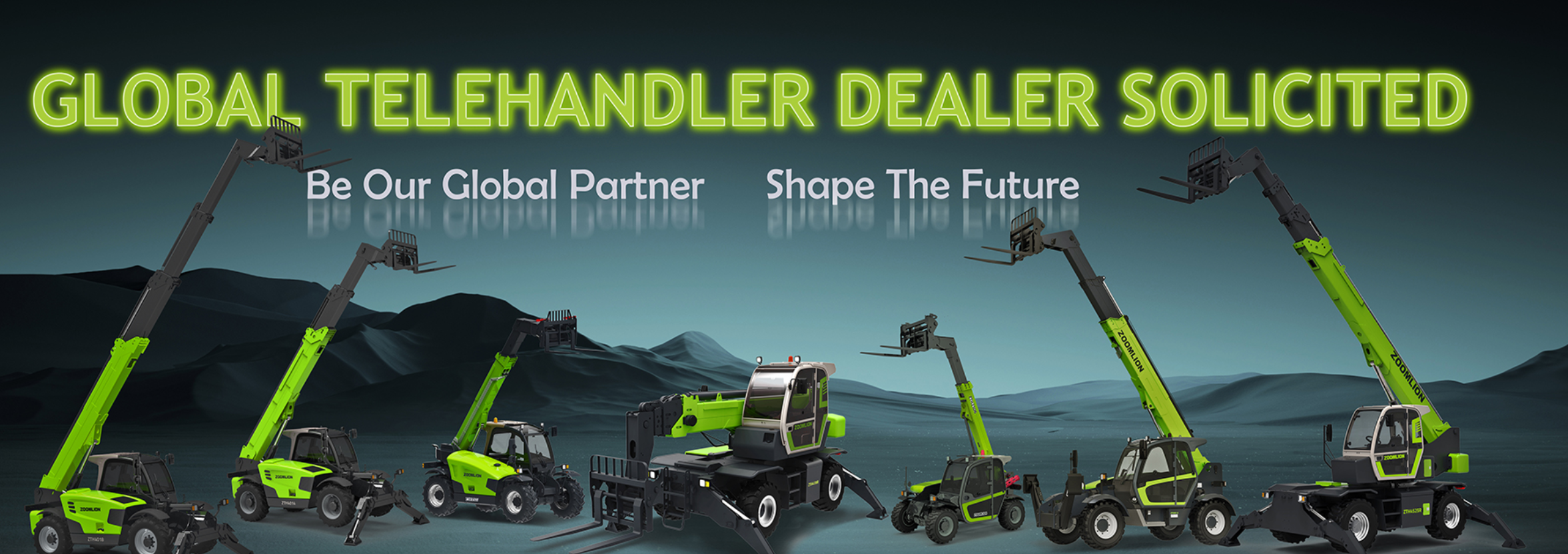
Forecast: Why rotating telehandlers matter to tomorrow’s job sites
Imagine cranes that think like rovers and handlers that swivel with surgical calm — that’s the scenario guiding this forecast. As designs edge toward compact intelligence, machines once limited to fixed boom angles will pivot into roles that blur lifting, access, and precision placement. That shift already nudges adjacent categories — from tracked platforms to crawler scissor lift systems — and it changes how sites measure reach, footprint, and operator oversight. Expect futures where rotation isn’t a luxury; it’s central to workflow choreography.
Key trajectories shaping rotating telehandlers
Three trends steer the speculative map:- Distributed sensing and assistive control: cameras, tilt-sensors, and load-aware feedback will let smaller crews handle complex lifts with fewer safety pauses.- Modular power and drive: electric and hybrid drivetrains combined with compact track options reduce ground pressure and extend runtime for constrained sites.- Interoperable platforms: common interfaces let telehandlers coordinate with aerial platforms and autonomous carriers.These trajectories aren’t fantasy — they reflect cross-industry engineering shifts and field feedback from operators testing prototype control suites.
Manufacturing realities and what factories are preparing
Factories that build tracked access gear will be a decisive node. Major suppliers refine subframe mounts, slewing bearings, and compact turntables to tolerate continuous rotation under load. You’ll see factory floors retooling jigs and welding sequences to produce slewing decks that can be serviced quickly on remote sites. Observations from Bauma in Munich underline that OEMs are converging on modular slewing units as standard components — a clear marker of where production is headed. For buyers watching supply chains, developments at crawler scissor lift factories often foreshadow the durability choices applied to rotating telehandler platforms.
Operator experience and field-tested priorities
Operators want fewer surprises and smoother judgment calls. Practical priorities that will dominate specification sheets are:- Predictable center-of-gravity feedback and simple override logic.- Compact travel mode for narrow lanes, with rotation locked or damped.- Service access that limits down-time for slewing components.Those priorities come from on-site trials and maintenance cycles — technicians note that serviceability dictates real uptime far more than peak lift numbers. Designs that make routine checks easy win daily reliability.
Possible configurations and how they compare
Think of three plausible configurations:- Light-rotation urban: small footprint, high-precision slewing, battery-first drive.- Heavy-rotation construction: larger counterweight, robust slewing bearings, hybrid power.- Integrated access hybrid: telehandler core with attachable platform decks for personnel lifts.Comparing them, the urban variant trades absolute lift for agility; the construction type trades transport simplicity for duty-cycle robustness; the hybrid prioritizes multi-role certification and quick-change attachments. Choosing among them means matching duty cycles rather than chasing headline capacity figures.
Common pitfalls to avoid on the path to adoption
Don’t assume rotation automatically reduces risk. Pitfalls to watch:- Overlooking service access to slewing bearings.- Under-specifying torque-limiting controls for attachment swaps.- Choosing tracks that save transport time but increase ground damage on soft sites.Address those early: require component accessibility during procurement, insist on integrated overload protection, and test drive under representative footing before signing off.
Synthesis: where Zoomlion fits into this speculative arc
Zoomlion has framed practical solutions around modular slewing systems and multi-role platforms, which aligns with the scenarios above. Designers who want balanced reach, serviceability, and cross-platform compatibility will find that those trade-offs are already baked into current product families — the same considerations guiding research on tracked access and rotating units. For practitioners thinking in terms of concrete on-site improvements rather than hypothetical tech, Zoomlion Access represents a coherent engineering stance that connects those futures to serviceable machines and supply networks.