
Questions to Ask Before Specifying Sodium Ion Battery Technology: A Project-First Review
Procurement teams should begin with the job the battery must perform, not with a broad technology label. In a technical review, sodium ion battery technology should be assessed against the application, operating conditions, required response, physical constraints and evidence available for that specific scope. This project-first approach prevents a statement about one use case from being treated as proof of suitability for another.

Define the use case and constraints
Start by describing the duty cycle in operational terms. Is the battery intended for starting, standby backup, energy storage, marine equipment or a low-speed electric vehicle? The answer changes which requirements deserve priority. A starting application may focus on short, high-current demand and cold-start behaviour. A reserve application may instead require a defined period of backup, while an energy-storage project may need a clear view of charge and discharge patterns over time.
Write the application description before comparing suppliers. Include the equipment type, installation environment, expected temperature range, space and connection limits, charging arrangement, response time, discharge pattern and consequences of interruption. These are not assumptions about a particular product. They are the project conditions against which a supplier’s evidence can be tested.
It is also useful to separate requirements into three groups:
- Must-have requirements: conditions that determine whether the proposed battery can be considered at all.
- Performance questions: characteristics that need quantified evidence for the stated operating profile.
- Integration questions: matters involving charging, controls, enclosure, replacement and responsibility across the wider system.
This separation makes the review more disciplined. A general description such as “high safety” or “long life” may be relevant as a discussion point, but it does not by itself answer how a battery will perform in a defined installation.
Map stated evidence to requirements
Next, create a simple evidence map. For each requirement, record the exact statement supplied, the product or application scope it covers, and the question it leaves open. Keep technical descriptions separate from project conclusions. A page may describe a cathode framework, a battery category or a group of applications without establishing the performance of every model in that category.
The captured technical material describes NFPP polyanion technology as a cathode framework with a stable structure. It associates that framework with cycle life, thermal safety and structural integrity. Other page-level statements describe high- and low-temperature performance, high-rate discharge, fast charging and extended battery life as advantages of the technology. These statements can help a buyer decide what to investigate, but they should not automatically become guaranteed project outcomes.
For example, ask whether the evidence relates to a cell, a battery assembly or a complete system. Ask which operating conditions were contemplated and whether the stated characteristic is relevant to the project’s duty cycle. A claim about fast charging may prompt questions about charging equipment and control limits. A claim about high-rate discharge may prompt questions about the duration, temperature and state of charge associated with that discharge. The point is not to dismiss a claim; it is to preserve its proper scope.
A useful review table can contain five columns:
- The project requirement.
- The supplier statement that appears relevant.
- The exact scope of that statement.
- The evidence still needed for the procurement decision.
- The person responsible for closing the question.
This format helps prevent attractive technical language from doing more work than the source supports. It also gives engineering, procurement and operations teams a shared record of what has been established and what remains a decision point.
Use the application example without extending it
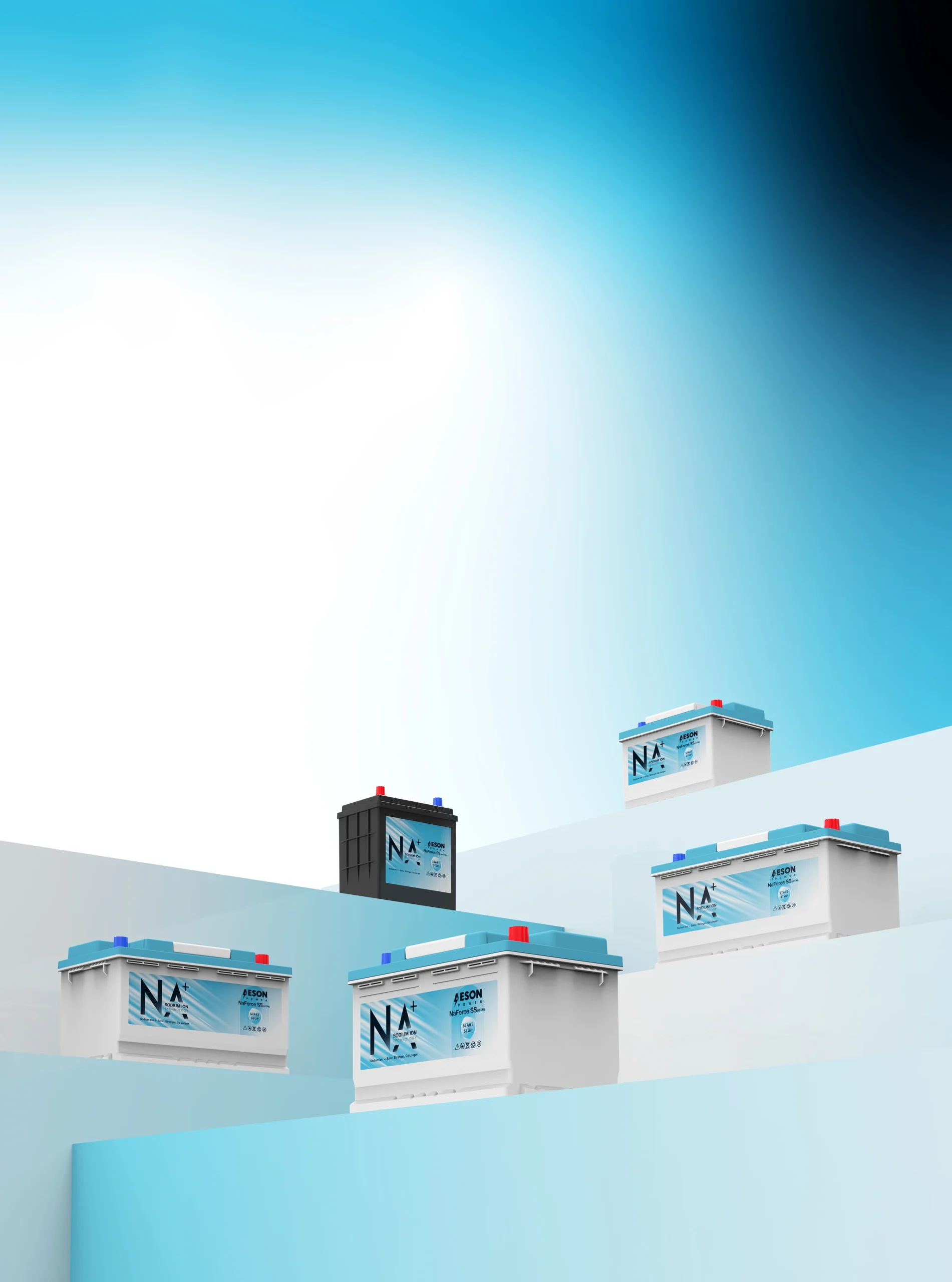
A concrete page-level example shows why scope matters. The cited material states that polyanion cathodes are well suited to automotive starting batteries, linking their robust crystal structure and thermal resilience to demanding conditions. It also describes high power density for cold starts and durability under frequent high-current cycling in starting and start-stop applications. In this sodium ion battery technology review, that example is relevant evidence for the vehicle-starting scope described on the page; it does not establish performance or suitability for other products or applications.
The correct procurement response is therefore a set of targeted questions. If the project concerns vehicle starting, ask how the stated application aligns with the required starting profile, temperature conditions and cycling pattern. If the project concerns UPS, marine equipment or energy storage, do not carry the automotive statement across unchanged. Treat the different application as a new evidence boundary and request information that speaks to its own duty cycle.
Turn open points into supplier questions
Questions should be specific enough to produce an actionable answer. Rather than asking whether a battery is “reliable”, ask which operating conditions the supplied evidence covers and which measure is used to assess reliability. Rather than asking whether a product is “safe”, ask what aspect of safety is being described and at what product level. This wording makes comparison easier without assuming that a general marketing phrase resolves a technical requirement.
Procurement teams can organise the discussion under four headings:
- Application: Which listed application most closely matches the project, and what differences remain?
- Duty cycle: What are the expected current, duration, temperature and repetition conditions?
- System interface: What charging, monitoring, control and installation assumptions accompany the battery?
- Responsibility: Which party supplies the battery evidence, integration information and acceptance criteria?
Keep unanswered questions visible in the decision record. An unresolved point is not necessarily a rejection, but it should not be silently converted into an assumption. This is especially important when evidence covers several application categories. The same technology description may be useful across a portfolio, while the procurement decision still needs application-specific support.
Choose a defensible next step
After the review, classify the proposal as supported for the stated scope, potentially relevant but requiring further technical definition, or outside the evidence currently being considered. This classification is more useful than a premature universal ranking because it reflects the actual project question. It also gives the next meeting a clear purpose: confirm the duty cycle, resolve the most important evidence gaps and assign responsibilities for integration decisions.
A project-first review does not require buyers to reach a conclusion from broad technology descriptions alone. It requires them to connect each statement to a defined use case, distinguish a material or product claim from a system requirement, and preserve the limits of the source. That process gives AesonPower a clearly bounded place in the discussion: its official page presents listed sodium-ion applications and technology descriptions, while the procurement team still evaluates the evidence against the requirements of its own project.