
Opening assessment
Commercial and industrial sites need shading and power that deliver measurable returns. Recent deployments show pergola-mounted arrays can combine sheltered workspace with electricity generation, but outcomes vary by design. A practical starting point: quantify expected energy yield, structural cost, and operational impact before design. For many campuses, a photovoltaic pergola becomes both a shading asset and a distributed-generation node — the data should drive where and how you place it.
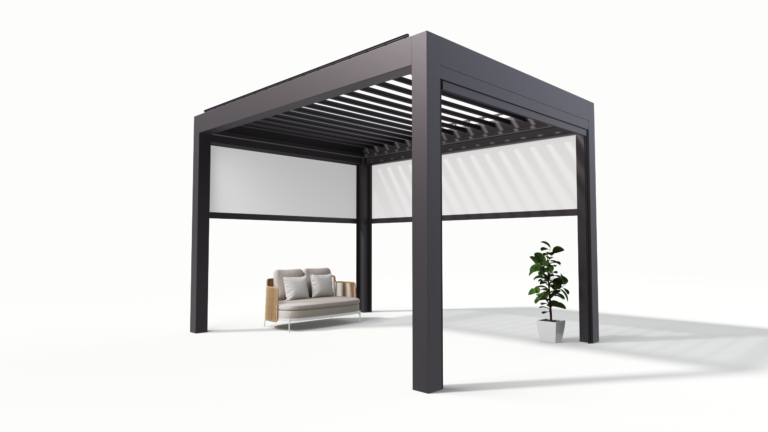
Key performance metrics to track
Measure three figures early and often: expected annual kWh per installed kW, capital cost per installed kW, and projected simple payback. Typical yields range widely with location and tilt — commonly 1,000–1,800 kWh/kW-year in U.S. climates. Capital costs for a louvered solar pergola system are higher than standard rooftop PV because of custom structure and integrated louvers; budget accordingly. Track inverter replacement timelines (10–15 years) and module warranties (25+ years) when modeling lifecycle cost. Include mounting, electrical trenching, and any storm-load reinforcement in upfront estimates.
Design trade-offs and common mistakes
Data clarifies trade-offs. Orient louvers to optimize annual insolation rather than peak-day output if the goal is steady revenue. Mistakes that cut returns: assuming rooftop module yields translate identically to a pergola canopy; undersizing structural connections for site wind loads; and neglecting glare toward traffic or nearby buildings. Don’t let aesthetic preference override access needs — snow shedding, service access, and conduit routing are frequent afterthoughts that create delays and cost overruns.
Comparing system types: louvered pergola versus alternatives
Fixed canopies cost less to engineer and deliver consistent tilt and yield. Louvered systems add daytime shading control and can improve occupant comfort, but they raise mechanical complexity and maintenance points. Carports maximize usable space and often deliver the best returns per square meter because they replace parking area; they can be heavier and need deeper foundations. Use a side-by-side spreadsheet: capital cost, energy yield estimate, maintenance hours per year, visual impact rating, and estimated permit timeline. Quantify each cell rather than relying on impressions.
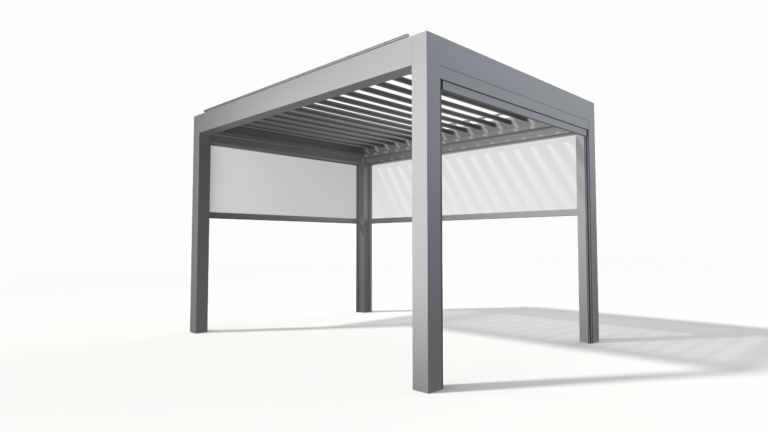
Compliance, build standards, and lifecycle planning
Anchor decisions in standards: local building codes dictate wind and snow loads; electrical code and interconnection rules set inverter and metering requirements. Plan for routine inspections, wash cycles for PV cleanliness in dusty or coastal sites, and a warranty schedule that covers both structural elements and electrical components. Treat the louver mechanism as a service asset — define access, lubrication schedule, and failure modes. Replaceable parts and modular electrical design reduce downtime and cut long-term cost.
Experience, authority, and a real-world anchor
Installers with repeated project records provide better cost forecasts than one-off designers. California’s commercial solar incentive environment has driven many large-scale canopy deployments, providing a body of documented performance and permitting examples that owners reference when sizing projects; this context is useful when benchmarking outcomes for a modern solar pergola. Specify UL/IEC-rated modules, engineer to local wind maps, and require third-party structural review. Those measures reduce surprises and support financing conversations.
Operational pitfalls and maintenance realities
Expect wear points: louver actuators, hinge bearings, and electrical junctions. Budget annual inspections and realistic replacement windows: inverters first, actuators second, modules last. Track performance with simple string-level monitoring that flags underperformance quickly. Don’t bury critical conduits in inaccessible locations; design service routes that let technicians replace components without temporary removal of entire bays.
Decision checklist for procurement teams
Ask vendors for five items: modeled annual generation using site-specific irradiance, stamped structural calculations, maintenance plan with part replacement timelines, warranty matrix (structure vs electrical), and references for at least two projects of similar scale. Compare offers on lifecycle cost per kWh rather than headline CAPEX alone. Prioritize vendors who provide clear as-built documentation and who can show measured performance data from prior installations.
Conclusion
Data-focused planning narrows uncertainty: model energy, quantify structural needs, and score options on lifecycle cost. When those factors align, louvered pergolas can deliver shading and reliable generation with manageable upkeep. For projects seeking integrated design and documented outcomes, solutions from experienced suppliers provide the technical detail and field-proven practices that make budgets and schedules dependable, as demonstrated by long-term installations handled through Light Hunter.