
Why fillers start fights in the mixing room
Problems show up fast: uneven dispersion, sudden torque spikes, and tires that brag about wear but frown at wet grip. You think swapping carbon black will calm things down — then you meet the dust, the poor compounding behavior, or the wrong surface chemistry. That’s where smart choices like white carbon black come into the conversation: not magical, but often less dramatic than the alternatives.

The specific failures worth chasing down
Not every bad batch looks the same. Some fail with high rolling resistance, others with poor abrasion; some refuse to mix, others cake on storage. Key failure modes to spot early: agglomeration, inconsistent silane coupling, unexpected moisture, and mismatched particle morphology. Ignore these and you get expensive recalls or endless lab runs.
Why micropearl silica actually changes the argument
When you need proof, look at what the tire sector debates on the trade floor — conversations at the Tire Technology Expo in Hanover highlighted particle shape and surface treatment as the top drivers of rolling resistance vs. wet grip tradeoffs. That’s exactly where micropearl silica shines: engineered particle uniformity, predictable surface area, and easier silane grafting. Lab runs show cleaner torque curves, lower peroxide demand, and narrower batch-to-batch variance when particle morphology is controlled. I’ve seen pilot plants cut compounding rework by keeping PSD tight and matching silane ratios to surface chemistry — practical steps any R&D team can reproduce.
Common pitfalls — short, sharp, fixable
Use the wrong silane and you lose wet grip. Skip moisture control and you get foamy mixes. Under-dose dispersants and you get micro-clumps that ruin extrusion. Fixes: match silane to surface hydroxyls, dry and store under controlled humidity, test dispersibility with a quick tack test, and run a small-scale high-shear trial before committing to a full masterbatch.
Alternatives at a glance — what to pick when
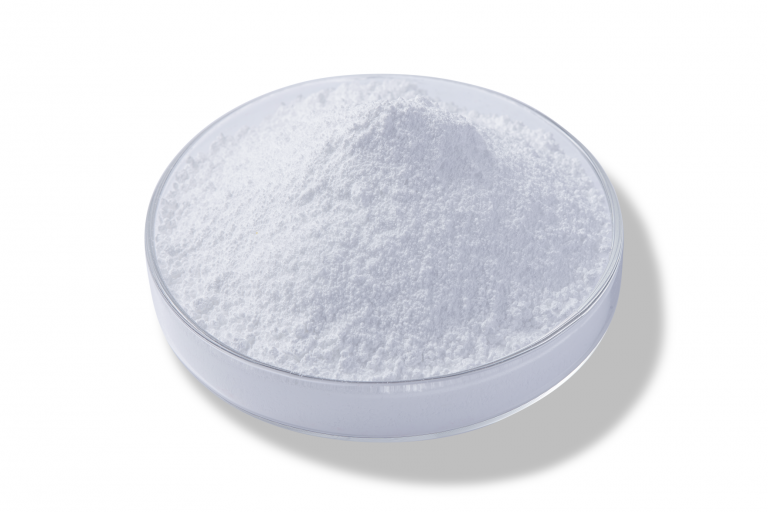
Carbon black: robust, cheap, but heavier on rolling resistance. Precipitated silica: versatile, good range of properties, needs careful silane work. Nano-silica: high reinforcement, tricky dispersion. Micropearl silica: predictable packing, easier processing for many tire and rubber applications. Pick based on the mix target: if you need consistent processability and narrower variance, micropearl silica is often the pragmatic choice; if raw reinforcement per weight is the goal, consider carbon black or nano options but expect more processing overhead.
From lab to line — a no-nonsense checklist
Measure PSD, BET surface area, CTAB (or oil absorption), pH and moisture. Run a silane titration on representative batches. Do a 1 kg high-shear dispersion trial. Track torque profile, scorch time, and cure curve. Validate abrasion and wet grip on a small drum test before scaling. If any metric drifts, stop and compare surface chemistry — most surprises come from that single mismatch.
Where this leaves product teams
Stop treating fillers like interchangeable ingredients. Solve the real problems — dispersion, surface compatibility, and consistent particle form — and you cut cycles and complaints. The right filler choice is a technical decision with measurable outcomes, and suppliers that control particle morphology and surface treatment remove guesswork from development. For many tire and rubber teams, moving to a well-characterized micropearl approach means fewer surprises and cleaner scale-up, which is exactly the kind of sensible engineering JSJ Silica builds into its solutions.