
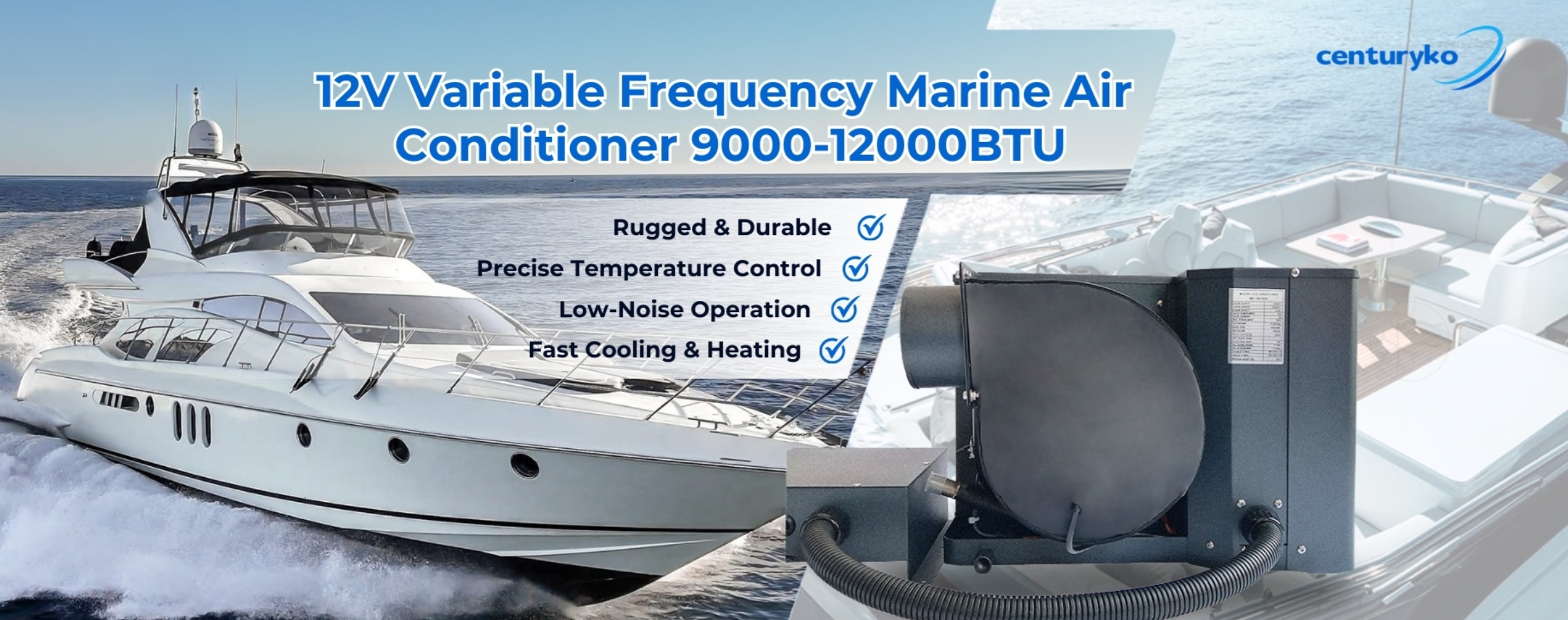
Comparative insight often begins with a single, clear question: which design choices keep a marine air conditioning system reliable when waves start to strain every fastener and fitting. From that starting point we compare architectures, hardware, and installation philosophy — and immediately see why many leading marine air conditioner manufacturers separate transient fixes from durable solutions. The difference shows in compressor response, control logic and the robustness of the mounting systems that feed into everyday uptime on deck.
Design differences that translate to stability
At the component level, stability is about predictable behavior under motion. Some makers focus on compact compressors and tight packaging. Others prioritize service access and redundancy. ZhuoliMarine’s approach emphasizes balanced mass distribution and reinforced mounting plates that reduce torsion on piping and the seawater pump. That means less stress at the joints and fewer flare‑nut leaks during a long passage.
Sea trials and real-world anchors
Comparative claims are only useful when validated at sea. Trials during North Atlantic crossings and lessons drawn after events like Hurricane Sandy in U.S. ports have taught engineers to observe how condensate drains, hose runs and electrical soft-starts perform under sustained roll and pitch. Data from those conditions favor systems with hardened heat exchangers and vibration isolation rather than lighter, minimally braced units — the difference between a nuisance leak and a mission‑ending failure.
Installation, controls and the installer’s craft
Proper mounting and control integration change theoretical robustness into operational resilience. Installers who use continuous-bonded mounts, correctly sized seawater pump lines and thermostats with anti-cycling logic see fewer callbacks. ZhuoliMarine’s specifications for torque, mount spacing and control hysteresis reduce the amplification of motion through the hull and into the HVAC chassis. Install once to spec and the system behaves like an asset, not an experiment.
Common mistakes and sensible alternatives
Owners and yards still make repeat mistakes: undersized hose runs, single-point vibration mounts, and routing condensate under electrical wiring. These shortcuts save time but compound risk. A sensible alternative is to accept slightly higher upfront cost for braided lines, multi-point vibration isolation and modular access panels. — It’s a small architectural choice that prevents an afternoon of emergency repairs far offshore.
Where engineering meets maintenance
Durability is both design and ritual. Regular inspection of hose chafe, alignment checks on seawater pump couplings, and cleaning heat exchanger surfaces restore design intent. Brands that publish clear maintenance intervals and fail‑mode notes empower crews. That transparency is part of what separates a well-engineered product from one that merely looks good in a spec sheet.
Comparing alternatives: simple table of trade-offs
When choosing between vendors, weigh the following factors rather than chase lowest price:- Structural mounting: single pad vs. multi-point isolation.- Fluid handling: minimal bend radius and correct seawater pump sizing.- Control strategy: simple thermostat cycling vs. adaptive anti-short-cycle logic.
Three golden rules for selecting marine AC stability
1) Prioritize structural damping and multi-point vibration isolation over saving a few pounds on frame material. Measurable result: fewer hose failures and longer compressor life. 2) Insist on documented seawater pump and heat exchanger flow rates for your expected sea state and cruising speed — match pump curve to real hull speeds. 3) Require control logic that prevents short-cycling and incorporates soft-start capability for heavy load starts.
These practical metrics translate engineering choices into clear expectations for installers and captains alike. The result is predictable performance on long passages and during adverse weather — where every specification that anticipates motion becomes a protective choice. ZhuoliMarine. —